

Introduction
In the early days, flying a drone was a high-stakes game. One wrong move and your expensive gadget was stuck in a tree. Today, things have changed. Consumer drones are everywhere. People use them for stunning vacation photos, learning about flight, or just having fun in the backyard.
As more people start flying, they want easier ways to stay in the air. They want safety. They want stability. Usually, we think of “smart” tech as having Artificial Intelligence (AI). But here is a secret: you don’t always need AI for a drone to be smart. Consumer drones with AI-free autonomy features are becoming a massive hit.
These non-AI autonomous drones offer a different kind of help. Instead of “thinking” like a human brain, they follow strict rules. This makes them predictable. It makes them reliable. Most importantly, it keeps your data private. If you want a drone that just works without the “Skynet” vibes, this guide is for you.
What Exactly Are Consumer Drones?
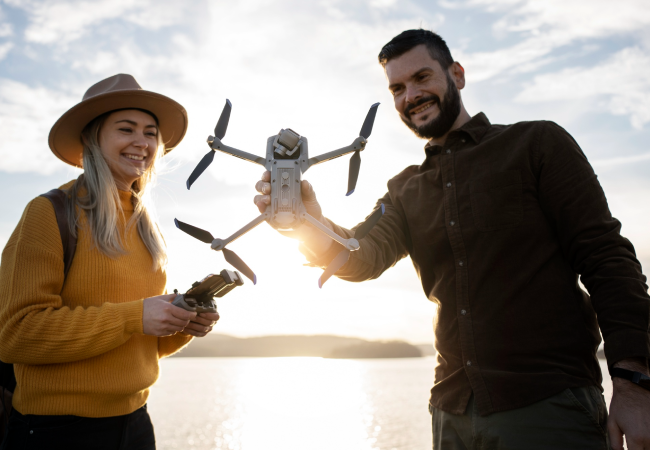
When we talk about consumer drones, we mean aircraft made for regular people. These aren’t the giant machines used by the military. They aren’t the heavy-duty drones used to spray entire farms. Instead, they are compact, light, and easy on the wallet.
Most people use these for aerial photography drones. They want that perfect “top-down” shot of a beach or a mountain. Others use them as recreational drones just to experience the thrill of flight. Because they are designed for the public, they have to be easy to use.
There is a big gap between a hobbyist drone and a commercial one. Commercial drones often have massive sensors and heavy AI. They need to map entire cities or inspect power lines. On the other hand, consumer drones focus on being beginner-friendly drones. They give you the tools you need to fly safely without requiring a pilot’s license or a computer science degree.
Understanding AI-Free Autonomy in Drones
What does “AI-free” actually mean? It sounds like a step backward, but it isn’t. AI-free autonomous drones use rule-based drone systems. Think of it like a calculator. If you press 2+2, you always get 4. The calculator doesn’t “learn” a better way to add; it just follows the math.
Standard AI-free drones work the same way. They don’t use neural networks to recognize your cat or your car. Instead, they use sensors to follow specific instructions. This is often called deterministic logic. It means if the drone senses it is too low, it moves up. It doesn’t wonder why; it just does it.
These drones rely on a few key pieces of hardware. They use GPS-based drone navigation to know where they are on a map. They use gyroscopes to stay level. They use barometers to check their height. By combining these, AI-free drone technology allows a drone to stay perfectly still in the wind without any human help.
How These Drones Work Their Magic
The “brain” of these drones is the flight controller. It is constantly talking to the sensors. Imagine the drone is a tightrope walker. The gyroscopes and accelerometers act as the inner ear, keeping the drone balanced. This creates drone flight stabilization that feels like the drone is sitting on an invisible shelf in the sky.
For moving around, the drone uses GPS-based drone navigation. You can tell the drone to go to a specific spot on a map. It doesn’t “see” the path; it just follows the coordinates. This is known as waypoint navigation drones. You set the points, and the drone follows the line. It is simple, effective, and very hard to mess up.
What about hitting things? Drone obstacle sensing without AI is quite clever. These drones use ultrasonic or infrared sensors. It works like a bat’s sonar. The drone sends out a sound or light wave. If it bounces back too fast, the drone stops. It doesn’t need to know if it’s a wall or a tree. It just knows something is there.
Top Features of Autonomous Consumer Drones
If you buy consumer drones with AI-free autonomy features, you get a specific set of tools. The most famous one is the Return-to-Home drone feature. If the battery gets low or you lose your signal, the drone looks at its GPS “home” point and flies back automatically. It is a lifesaver for new pilots.
Another great tool is drone geofencing features. This acts like a digital fence. You can set a limit so the drone won’t fly further than 100 feet from you. It also keeps the drone out of restricted areas like airports. This keeps you out of legal trouble without you having to memorize every flight map.
- Automated Takeoff and Landing: You press one button, and the drone rises to five feet and hovers.
- Altitude Hold: The drone uses a barometer to stay at the exact same height, even if you let go of the sticks.
- Position Locking: Using GPS, the drone fights the wind to stay over one exact square inch of ground.
- Pre-programmed Modes: These include “Orbit” (flying in a perfect circle) or “Follow-Path,” which makes your videos look professional.
Why Choose AI-Free Autonomy?
The biggest reason people love AI-free drones is predictability. With an AI drone, the software might try to “guess” what you want. Sometimes it guesses wrong. With non-AI autonomous drones, the machine does exactly what the code says. There are no surprises. This builds a lot of trust between the pilot and the machine.
Then there is the price tag. AI chips and software are expensive to build and maintain. Consumer drones without these features are much more affordable. You get 90% of the useful features for a fraction of the cost. This makes them the perfect beginner-friendly drones for someone just starting out.
Privacy is another huge win. AI drones often need to process data in the “cloud.” This means images of your backyard might end up on a server somewhere. Privacy-focused drones with AI-free systems usually work entirely offline. Your data stays on your SD card. For many users, this peace of mind is worth more than fancy AI tracking.
The Weak Spots of AI-Free Systems
We have to be honest: these drones aren’t perfect. Because they don’t “think,” they can be a bit “dumb” in complex spots. If you fly a drone with AI-free drone technology in a thick forest, it might struggle. Its sensors might see a branch, but it won’t know how to navigate a complex maze of leaves like an AI drone would.
Drone obstacle sensing without AI is also limited by speed. If you are flying 30 miles per hour, an infrared sensor might not see a power line in time to stop. These systems are best for slow, steady flights. In high-wind or high-speed situations, the pilot usually needs to take over manual control to stay safe.
There is also the issue of “static” logic. If a dog runs under the drone, an AI drone might recognize it and move. An AI-free drone just sees a “distance change” and might react more slowly. You have to be the “brain” for the drone when the environment starts changing fast.
How to Make AI-Free Drones Even Better
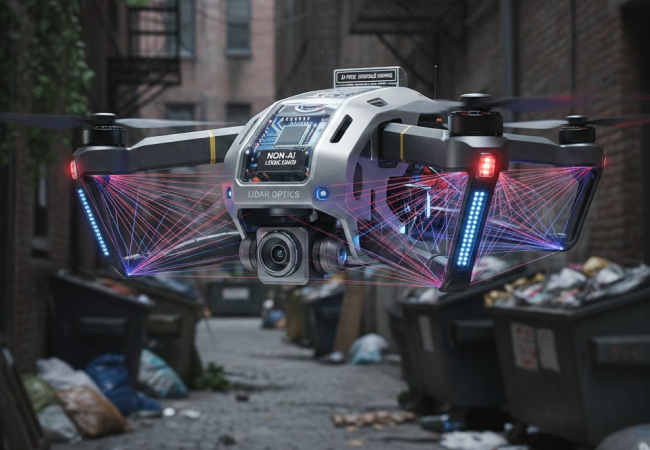
Even though they are great, autonomous consumer drones can still improve. The first step is better sensors. We don’t need AI to have better laser sensors (LiDAR) that can see smaller objects. Improving the hardware would make drone obstacle sensing without AI much more reliable in tight spaces.
We also need better battery life of consumer drones. Right now, most hobby drones fly for about 20 to 30 minutes. If we optimize the code in rule-based drone systems, the motors can run more efficiently. This would mean longer flights and more time for aerial photography drones to get the perfect shot.
- Better GPS Accuracy: Using multiple satellite systems (like Galileo and GLONASS) for tighter positioning.
- Stronger Failsafes: Improving drone failsafe mechanisms so the drone lands safely even if a motor fails.
- Easier Apps: Making the flight planning software so simple that a child can map a flight path.
- Weather Resistance: Better sensors that don’t get “confused” by rain or heavy fog.
AI-Free vs. AI-Powered: Which is Best?
It really comes down to what you need. AI-free drones are like a reliable pickup truck. They are sturdy, they do what they are told, and they are easy to fix. They are the kings of consumer drone automation for the average person. They are great for flying in open fields or over parks.
AI-powered drones are like a self-driving Tesla. They are amazing at following a mountain biker through a forest or avoiding moving cars. But they cost a lot more. They also require more updates and data sharing. If you are a professional filmmaker, you might want the AI. If you are a hobbyist, AI-free autonomous drones are usually the better deal.
When looking at drone autonomy vs AI, remember that autonomy just means “self-moving.” You can have a self-moving drone that doesn’t “think.” For most people, having a drone that stays level and comes home when the battery is low is all the “smart” tech they actually need.
Best Ways to Use Your AI-Free Drone
You can do a lot with consumer drones with AI-free autonomy features. One of the best uses is learning. Because they are beginner-friendly drones, they teach you the basics of flight without the risk. You learn how to use the sticks while the drone handles the hard part of staying in the air.
For aerial photography drones, AI-free features are perfect. You can set the drone to “Hover” or “Orbit.” This lets you focus entirely on the camera. You don’t have to worry about the drone drifting away. You just frame the shot, click the button, and let the GPS-based drone navigation hold the drone in place.
- Training: New pilots use them to practice “line-of-sight” flying.
- Roof Inspections: Using altitude hold to safely check for broken shingles.
- Simple Mapping: Using waypoint navigation drones to take photos of a large piece of land.
- Family Fun: Capturing group photos from the air without needing a professional photographer.
What to Look for Before You Buy
Before you spend your hard-earned money, check the specs. Look at the battery life of consumer drones in your price range. You want at least 20 minutes of actual flight time. Also, check the GPS quality. A drone with “Dual GPS” will be much more stable when using autonomous drone features.
Don’t forget about the drone failsafe mechanisms. Make sure the drone has a physical “Home” button on the remote. Check if it has drone geofencing features to help you stay within legal limits. These small details are what make AI-free drones a joy to fly rather than a stressful chore.
The Future of Flying Simple
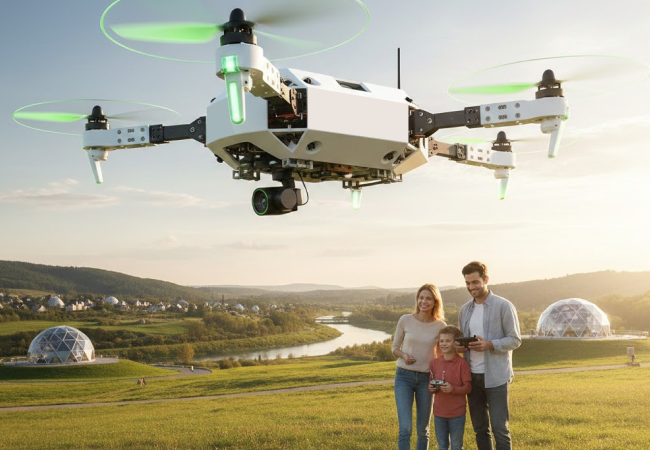
The future looks bright for consumer drones with AI-free autonomy features. While AI gets all the headlines, many people are moving back to simpler tech. They want products that don’t track them. They want gadgets that are easy to repair. Privacy-focused drones are a growing trend that isn’t going away.
We will likely see “hybrid” drones soon. These will use rule-based drone systems for 99% of the flight but have a tiny bit of AI just for emergencies. But for now, the pure AI-free autonomous drones remain the best choice for anyone who values simplicity, safety, and a lower price tag.
Final Thoughts
Consumer drones with AI-free autonomy features prove that you don’t need a supercomputer in the sky to have a great flight. They offer the perfect mix of consumer drone automation and manual control. Whether you want to take photos, learn a new hobby, or just explore your neighborhood, these drones are a fantastic choice.
By sticking to rule-based drone systems, these machines stay affordable and easy to use. They protect your privacy and give you a consistent experience every time you take off. In a world full of complex AI, sometimes the best way to fly is to keep it simple.
Would you like me to help you compare specific drone models that use these AI-free features?
Frequently Asked Questions
1. Are AI-free autonomous drones safe?
Yes. In many cases, they are safer because they are more predictable. They follow strict rules and have built-in drone safety features like auto-landing.
2. Can beginners fly these drones?
Absolutely. These are the top beginner-friendly drones on the market. They take the stress out of flying by handling the stabilization for you.
3. How do they avoid hitting things?
They use drone obstacle sensing without AI. This usually means infrared or ultrasonic sensors that measure distance, much like a car’s backup camera.
4. Do I need the internet to fly?
Usually, no. AI-free drones rely on GPS satellites and internal sensors. This makes them great for flying in remote areas where there is no cell signal.



Leave a Reply