


5G Advanced & Early 6G Network Technologies: The Future of Connectivity
1. Introduction: The Next Phase of Wireless Connectivity
5G Advanced is not just a minor update. It is the real start of the next digital revolution. Most people think 5G is the finish line. But they are wrong. 5G is actually evolving into something much more powerful. This new phase is called 5G Advanced, or 5.5G. It serves as a vital bridge in the 5G to 6G evolution.
Why does this matter to you right now? Because our digital world is exploding. AI-powered networks are no longer a dream. They are a requirement. We see billions of new IoT devices every year. These devices need to talk to each other instantly. Traditional networks simply cannot keep up with this growth.
That is where 5G Advanced network technologies come into play. They provide the speed we want and the reliability we need. At the same time, they are laying the groundwork for 6G network technologies. We are moving toward a world where every object is connected. This transition will change how we live, work, and play.
2. What is 5G Advanced? (5.5G Explained Simply)
So, what is 5G Advanced? Think of it as a massive performance boost for the 5G we use today. It is defined by the 3GPP Release 18 standards. You don’t have to rip out the old towers to get it. Instead, it enhances the current infrastructure to make it smarter. The goal is to create next-generation mobile networks that are faster and greener.
The difference between standard 5G and 5.5G technology is huge. Standard 5G gave us better phone speeds. But 5G Advanced gives us “intelligence.” It uses network automation and optimization to fix problems before they happen. This means your connection stays strong even in a crowded stadium or a busy city center.
The Big Goals of 5.5G
The creators of this technology focused on three main pillars. First is performance. They want faster downloads and even faster uploads. Second is intelligence. They are building AI-native network architecture into the core. Third is efficiency. We need sustainable network technologies that use less power. These goals ensure that our future wireless networks can handle the massive data of the 2030s.
3. Key Features of 5G Advanced
One of the biggest wins is the move toward ultra-low latency networks. Latency is the delay you feel when you click a link. In the 5.5G era, this delay almost vanishes. This is a game-changer for things like remote surgery and high-end gaming. When every millisecond counts, 5G Advanced delivers the results.
We are also seeing incredible leaps in uplink speeds. Most people focus on downloading movies. But businesses need to upload data. Think about high-definition security cameras or industrial sensors. They need to send massive amounts of data to the cloud. 5G Advanced network technologies make this process smooth and reliable.
Another key feature is the “green” aspect. 5G Advanced uses smart power management. It can turn off parts of the network when no one is using them. This makes the whole system much more cost-effective for operators. It also helps protect the environment. It is a win-win for everyone involved in high-speed wireless communication.
4. Real-World Use Cases of 5G Advanced
Smart Cities & Infrastructure
Smart city connectivity is the first place we will see the impact. Imagine traffic lights that talk to cars to prevent jams. Or power grids that fix themselves during a storm. 5G Advanced provides the backbone for these systems. It allows thousands of sensors to work together in one square mile without any lag.
Autonomous Vehicles & V2X
We are also moving closer to a world of self-driving cars. This relies on autonomous vehicle communication. Cars need to “see” around corners by talking to other cars. This is called V2X communication. It requires the extreme reliability that only 5G Advanced network technologies can provide. It makes our roads safer for everyone.
Industrial IoT & Smart Manufacturing
Factories are getting a major makeover. We call this Industrial IoT networks. Robots can now move freely around a factory floor without being plugged into a wall. They use high-speed wireless communication to coordinate their movements. This leads to faster production and fewer mistakes. It is the future of making things.
XR and Immersive Connectivity
Have you tried Virtual Reality? It often feels clunky because of the wires. 5G Advanced changes that. It enables XR and immersive connectivity without the cables. You can join a virtual meeting or play a 3D game anywhere. The high bandwidth and low latency make the digital world feel as real as the physical one.
5. The Transition from 5G Advanced to Early 6G
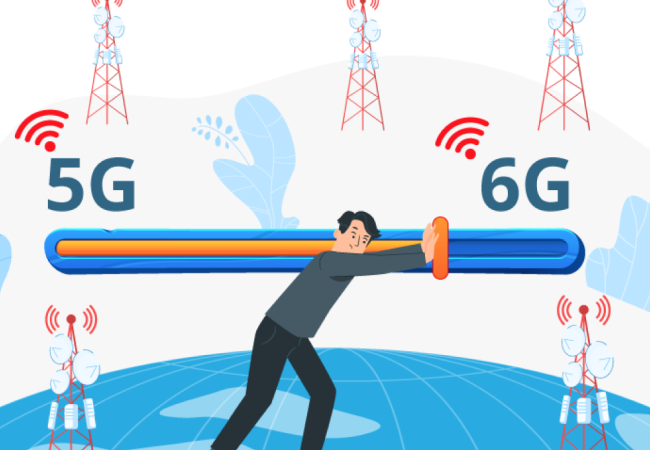
The 5G to 6G evolution is already happening in labs around the world. Innovation is moving faster than ever before. We aren’t moving to 6G because 5G failed. We are moving because we found new ways to use the airwaves. 5G Advanced is the perfect testing ground for these new ideas.
Think of early 6G technology as the ultimate version of connectivity. Researchers are currently testing terahertz communication. This uses very high frequencies to send data at mind-blowing speeds. Many of the features we see in 5.5G will become the standard in 6G. This includes AI-powered networks and digital twin networks.
The Timeline to 6G
- 2024–2028: We will see the wide rollout of 5G Advanced.
- 2026–2030: This is the peak time for 6G wireless communication research.
- Post-2030: We expect the first commercial 6G networks to go live.
6. What Is 6G? An Early Look at the Future
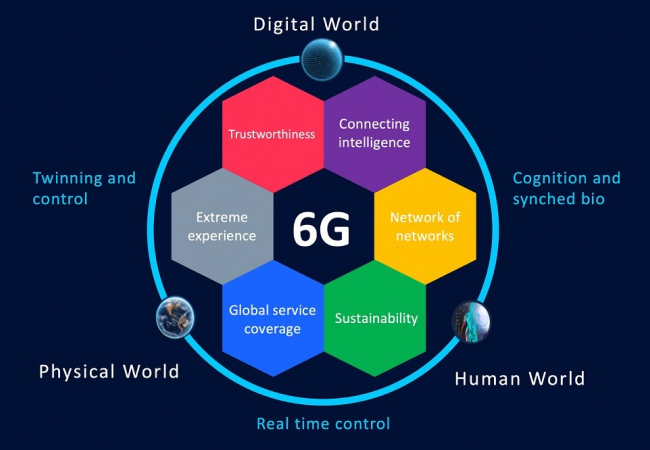
6G network technologies will go far beyond just “faster phones.” We are looking at a system that combines sensing, computing, and talking into one. Experts believe 6G could reach speeds of 1 Tbps. That is 100 times faster than the best 5G. It will make future wireless networks feel instantaneous.
But speed is only half the story. 6G wireless communication will be “AI-native.” This means the AI is not just an add-on. The AI is the brain of the network itself. It will manage everything from signal strength to security. This creates a level of extreme reliability that we have never seen before in telecom.
In the 6G era, the network will also be able to “see.” By using integrated sensing and communication (ISAC), the network can detect the shape and movement of objects. This means a 6G tower could detect a car accident even if no one calls it in. It turns the entire world into a giant, smart sensor.
7. Core Technologies Powering Early 6G Networks
AI-Native Networks
The heart of early 6G technology is AI. These networks will be self-learning. If a part of the network breaks, the AI will reroute traffic in milliseconds. This is the peak of network automation and optimization. It reduces the need for human intervention and keeps costs down for everyone.
Terahertz (THz) Communication
To get those “Tbps” speeds, we need more “road” for the data. Terahertz communication provides that road. These are ultra-high frequencies that carry massive amounts of info. While they don’t travel long distances yet, they are perfect for short-range, ultra-fast links in offices or hospitals.
Non-Terrestrial Networks (NTN)
6G won’t just be on the ground. It will include satellite-based internet. We call these non-terrestrial networks. By using drones and low-earth orbit satellites, 6G can reach the middle of the ocean or the top of a mountain. This ensures that the whole world stays connected, no matter where you are.
8. 5G vs 5G Advanced vs 6G: Key Differences
| Feature | 5G | 5G Advanced | 6G |
| Speed | Multi-Gbps | Higher Multi-Gbps | Up to 1 Tbps |
| Latency | Low | Ultra-low | Near-zero |
| AI Role | Limited | AI-assisted | AI-native |
| Coverage | Terrestrial | Enhanced | Terrestrial + Space |
As you can see, the jump from 5G Advanced to 6G is massive. We move from just “connecting people” to “connecting intelligence.” This table shows why future telecom infrastructure is so exciting. We are building a world that never disconnects and never slows down.
9. Challenges and Limitations Ahead

Building next-generation mobile networks isn’t easy. There are huge hurdles to clear. The first is the cost of infrastructure. Installing new hardware across the globe is expensive. Companies have to balance the cost of 5G Advanced with the future research needed for 6G.
Then there is the issue of spectrum. Terahertz communication needs specific frequency bands. Governments must work together to clear these bands for use. We also have to think about power. Running a 1 Tbps network takes a lot of energy. This is why sustainable network technologies are so important for the future.
Finally, we have to talk about security. As we move toward AI-powered networks, the “attack surface” grows. Hackers might try to trick the AI. This means we must build security into the very foundation of 6G network technologies. Privacy must be the top priority from day one.
10. Industry Impact: Who Wins?
Healthcare
The medical field will be transformed. With ultra-low latency networks, doctors can perform surgery from a different continent. Early 6G technology also allows for constant, real-time patient monitoring. AI can flag a heart issue before the patient even feels it. This will save countless lives.
Automotive and Transport
We already mentioned self-driving cars. But it goes further. Autonomous vehicle communication will lead to “platooning.” This is where trucks follow each other closely to save fuel. It makes shipping cheaper and faster. It also reduces the number of accidents on our highways.
Gaming and Media
For gamers, the future is bright. XR and immersive connectivity will allow for holographic calls. Instead of a flat video on a screen, your friend will appear as a 3D image in your room. This level of high-speed wireless communication will make the world feel much smaller and more connected.
11. Conclusion: Preparing for a 6G-Powered World
The 5G to 6G evolution is the most exciting journey in tech today. 5G Advanced is the bridge that gets us there. It isn’t just about faster downloads on your phone. It is about AI-native network architecture and intelligent wireless networks that change how our society functions.
Businesses and developers need to act now. You should start looking into edge computing and AI. Build your apps to handle the power of 5G Advanced network technologies. If you wait until 2030 to think about 6G, you will already be behind. The leaders of tomorrow are the ones studying early 6G technology today.
We are moving from a world of simple connections to a world of total intelligence. From smart city connectivity to digital twin networks, the possibilities are endless. The future is faster, smarter, and more immersive. And the best part? It has already started.
12. FAQs
Q1. Is 5G Advanced the same as 6G?
No. 5G Advanced (5.5G) is an upgrade to current 5G. It prepares the world for 6G network technologies.
Q2. When will 6G be available?
Most experts expect 6G wireless communication to start around 2030.
Q3. Do I need a new phone for 5G Advanced?
Some features will work on current phones. However, to get the full benefits of 5.5G technology, you may need a newer device.
Q4. Why is AI so important for 6G?
AI allows for network automation and optimization. It makes the network smart enough to manage itself without human help.
Q5. Will 6G replace 5G?
Eventually, yes. But for many years, 5G Advanced and 6G will work together to provide global coverage.





Leave a Reply