

Introduction
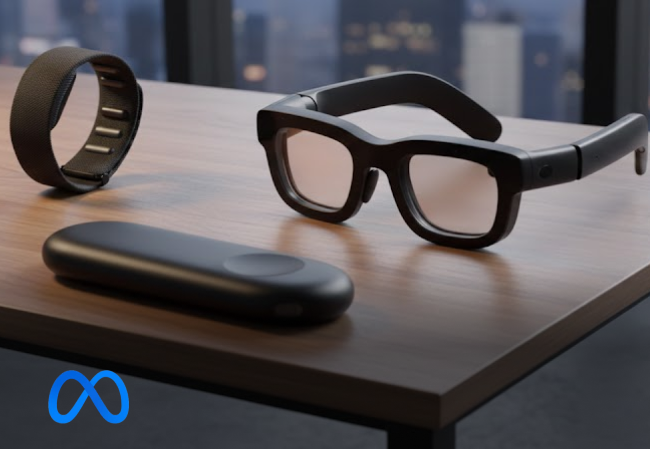
Montreal has a charm that pulls you in fast. It is a city where French and English mix on every street corner. Cafés smell like fresh pastries. Metro stations buzz with life. And conversations switch languages in a heartbeat. So when I got the Meta Ray-Ban smart glasses, I knew exactly where to test them. Montreal felt like the perfect playground for a Meta Ray-Ban AI translation experiment.
Meta markets these glasses as the next big thing in AI wearable technology. Hands-free. Fast. Smart. A device that listens, translates, and guides you with a simple voice command. I pictured myself walking through the city with ease. No phone. No apps. Just a sleek pair of glasses doing the heavy lifting. I expected smooth, real-time French translations in cafés, markets, and busy streets.
But that dream lasted only a few minutes.
What started as a fun Meta Ray-Bans translation test soon turned into a mix of mistranslations, awkward moments, and a lot of confused looks from locals. I saw wrong outputs, slow responses, and random errors that made no sense. Montreal tested the tech hard. And the tech failed just as hard.
If you plan to travel with a wearable AI translator, hold on. My experience might save you from a frustrating trip.
Background: What Meta Ray-Ban AI Glasses Claim to Do
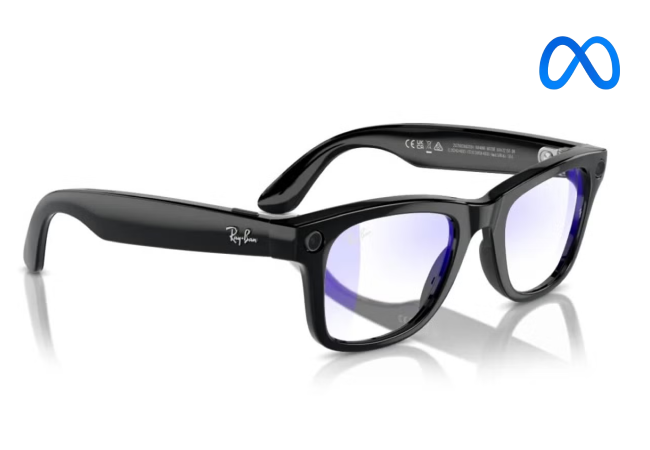
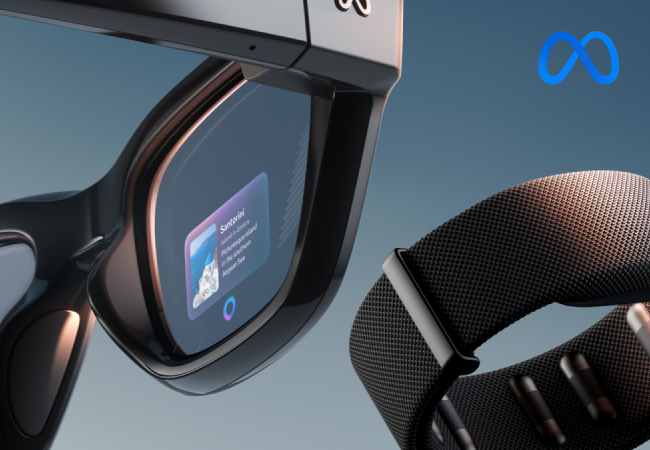
Meta Ray-Bans come packed with bold promises. Meta says the glasses can listen, see, and translate the world around you. They combine microphones, speakers, cameras, and AI models to act as a real-time guide. The company promotes them as a real-time translation device ready for everyday use.
Here’s what the glasses claim to do:
- Translate languages as you speak.
- Show contextual information
- Identify objects
- Capture photos and videos.
- Respond to voice commands instantly.
These features sound powerful on paper. The brand positions the glasses as an advanced AI translation glasses tool for travelers and multilingual users. They promote fast interactions and instant support. Meta says the glasses can handle accents, short phrases, and fast speech.
This is why I picked Montreal. It is the ultimate bilingual city translation test. The constant switch between French and English makes it ideal for testing any real-time language translation technology. You hear standard French in some areas and Québecois slang in others. Signs, menus, and conversations shift between languages constantly.
The city gave the perfect setup. The glasses did not.
Setting the Scene: Where I Tested the Glasses
To make the review fair, I tested the Meta Ray-Ban AI translation feature in real-life situations. I wanted to see how the glasses handled noise, accents, and casual interactions. I used them across typical travel scenarios where translation matters the most.
I tried the glasses in:
- A busy café in Plateau-Mont-Royal
- Crowded sidewalks downtown
- The Montreal Metro
- A quiet corner of Old Port
- Local bakeries with fast-talking staff
- Street markets
- Restaurants with French-only menus
Each place had a different sound level. Some were loud and chaotic. Others were quiet and calm. These locations helped me judge how strong the Meta AI glasses performance really was across environments.
But the outcome stayed the same. The glasses struggled more than they succeeded.
What Actually Happened During the Test
The First Fail: Everyday Conversations
The first test was simple. I asked a barista, “Do you have vegan options?” I expected a smooth French translation whispered into my ear. Instead, the glasses translated it into something strange. The barista paused, looked confused, then laughed and pointed at random pastries.
It was the start of many odd exchanges during my Meta Ray-Bans Montreal test.
The translation was not only wrong but delivered in an unnatural tone. It felt robotic and out of sync with normal conversation. This early issue showed a clear Meta glasses review problem: the device could not handle casual French.
Weird Mistakes and Funny Errors
The glasses made mistakes that were sometimes hilarious but often embarrassing. For example, I asked for the Metro entrance. The translation told someone, “Where is the metal hole?” This mistake shows a classic case of translation mistakes AI is known for.
Other errors were even more bizarre:
- It translated quiet conversations when no one spoke.
- It created full sentences that nobody said.
- It mixed English phrases into French responses.
These issues show how early the tech still is. The glasses need better accent recognition and contextual understanding.
Moments Where the Glasses Froze Completely
In loud streets, the translation stopped. The microphones pulled in every sound except the one I needed. In the Metro, the device struggled even more. The weak network caused long delays. Sometimes the glasses defaulted to English even when people spoke French.
This made the real-time translation device feel more like a slow offline tool. A few times, the glasses even invented sentences — classic AI misinterpretation examples.
Rare Wins: When the Glasses Actually Worked
The glasses did succeed in a few very specific cases:
- Short, slow sentences spoken clearly.
- Printed text on signs or menus
- Very quiet environments
- Simple object recognition
These moments showed potential. But they were rare. The device needs major upgrades to work in typical real-world scenarios. It remains an early-stage wearable AI tech product rather than a reliable travel companion.
Why the Meta Ray-Ban AI Translation Feature Failed
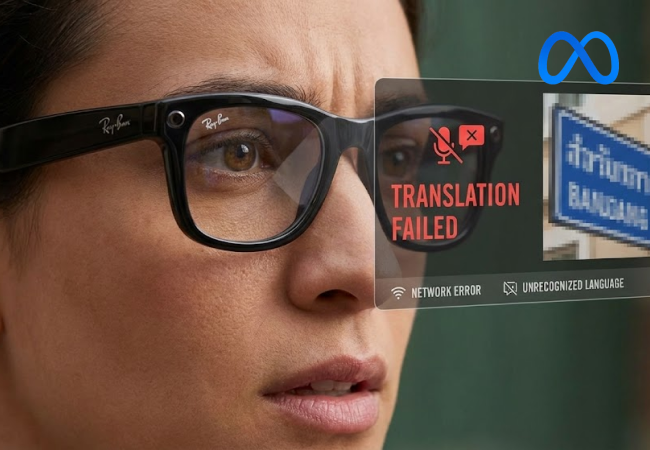
The failures were not random. Several technical issues appeared again and again. These issues show the gaps in current smart glasses translation features.
1. Québecois French Translation Problems
Québecois French has its own slang, rhythm, and sound. The glasses did not understand many local words. This led to mistranslations and incomplete phrases. A strong Meta Ray-Bans translation test must handle regional accents well, but these glasses did not.
2. Noise Issues With Smart Glasses
Montreal streets get loud. Cars, people, music, and wind all mix together. The microphones picked up everything. The glasses often captured noise instead of speech. This destroyed the clarity needed for accurate translation.
3. AI Latency and Dependency on Networks
The device relies heavily on internet connectivity. In underground Metro stations or crowded areas, this led to delays. A real-time language translation tool must be fast. These glasses were not.
4. Literal Translations Instead of Contextual Meaning
The AI translated words, but not the meaning. French requires context. The glasses missed cultural cues and conversational flow. This is a major issue in AI wearable technology.
5. Limited Processing for Fast Speech
Locals speak quickly. The glasses struggled every time. They lagged, skipped, or froze. This made the Meta AI glasses performance inconsistent.
Comparison With Other Translation Tools
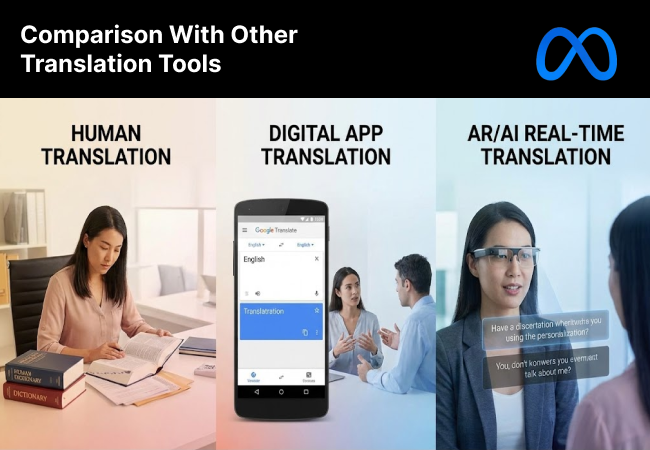
To understand whether the issue came from Montreal or the glasses, I compared the translations with other tools. And the results were clear.
Tools That Performed Better
- Google Lens: Fast, accurate with printed text
- Pixel Buds: Stronger at spoken French
- ChatGPT Mobile App: More contextual and smooth
- Other translators: Better accent understanding
Every tool delivered stronger results than the Meta Ray-Ban smart glasses. The glasses look futuristic, but the translation software still needs serious upgrades.
User Experience Takeaway
Beyond translation, the physical and usability experience also had flaws.
How It Felt to Use the Glasses
- Light but not ideal for long wear
- The battery drained fast in translation mode.
- Microphones captured too much background noise.
How It Performed Outside Translation
- Solid photos and videos
- Mixed performance with object recognition
- Voice commands sometimes failed.
These issues made the Meta Ray-Ban AI translation experience feel incomplete.
Final Verdict
Who Should Buy These Glasses
- Early adopters
- People who love cutting-edge tech
- Users who want stylish AI-powered eyewear
- Travelers who need hands-free photos or videos
Who Should Avoid Them
- Travelers who rely on accurate translations
- Anyone visiting bilingual or accent-heavy areas.
- People expect a smooth, real-time translation device to be reliable.
- Users who want instant accuracy
The Meta Ray-Ban AI translation feature is not ready for real travel yet.
Pros and Cons of Meta Ray-Ban AI Translation
Pros
- The Meta Ray-Ban AI translation feature delivers a smooth hands-free experience, which makes simple travel tasks easier because you can keep your phone in your pocket and still receive instant guidance, quick cues, and real-time alerts without breaking your walking flow or stopping mid-conversation.
- The glasses offer a stylish and lightweight design that feels comfortable during short sessions, allowing users to enjoy the benefits of Meta Ray-Ban smart glasses while still blending in naturally in public spaces without looking like they are using a high-tech device.
- In calm environments where background noise is minimal, the Meta Ray-Bans translation test shows that the glasses can produce clear, short, and fairly accurate translations that help with basic directions, easy phrases, or printed text, making them useful for low-stress travel moments.
- The device performs well for capturing photos and videos, and this adds extra value beyond simple AI translation glasses because travelers can document memories hands-free while staying focused on the experience instead of fumbling with a phone.
- The built-in AI wearable technology also helps with quick object identification, and while this is not perfect, it still provides fast visual feedback that can help travelers understand simple labels, menus, or signs, especially when paired with real-time language translation features.
Cons
- The Meta Ray-Ban AI translation system struggles heavily with Québecois French translation problems, producing literal outputs, mistranslated phrases, and confusing results that fail to capture tone or meaning, especially when spoken by locals who use regional slang or speak at natural conversational speed.
- The microphones often pick up surrounding noise instead of the speaker’s voice, and this noise interference makes the smart glasses translation features unreliable in places like streets, markets, Metro stations, or restaurants where environmental sounds drown out clear speech.
- The translation engine depends too much on stable network access, and this heavy reliance causes delays, lag, and slow responses in the Metro or crowded areas, which ruins the real-time translation device experience because the glasses fail to deliver output when you need it most.
- The Meta AI glasses performance becomes inconsistent when people talk quickly or when conversations involve slang, humor, or casual language, and this leads to awkward pauses, wrong information, and moments where the glasses freeze or generate AI misinterpretation examples that are not helpful at all.
- The battery drains faster than expected during continuous translation, and this creates major limitations for travelers who want a reliable wearable AI translator because the device cannot last through a full day of exploring Montreal or navigating bilingual city translation test situations.
- The glasses often fall back to literal word-by-word translation instead of understanding context, cultural nuances, or emotional tone, which makes the Meta Ray-Ban AI translation feel robotic, unnatural, and sometimes incorrect when compared to tools like Pixel Buds, Google Lens, or the ChatGPT translation comparison app.
- The camera and object recognition system occasionally misidentifies items or reads text incorrectly, which weakens trust in the overall device since users expect accurate Ray-Ban Meta glasses accuracy when traveling in unfamiliar areas that require fast and dependable visual understanding.
Conclusion
The Meta Ray-Ban AI glasses show promise. The idea is powerful. The design is sleek. And the concept of a wearable AI translator feels exciting. But my Montreal test made one thing clear: the translation feature is still in the early stages.
Montreal’s mix of accents, noise, and bilingual conversations made it the perfect stress test. The glasses were not ready for that challenge. Still, the potential is huge. With better language models, smarter processing, and stronger microphones, the next version could transform how we travel.
For now, keep your phone close. And if you’re planning a bilingual adventure, don’t rely only on Meta Ray-Ban AI translation. The tech needs time before it becomes truly reliable.



Leave a Reply