
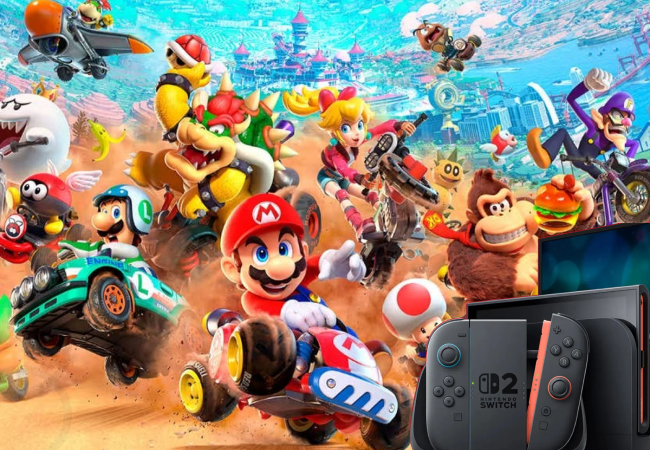
The Nintendo Switch 2 has finally been revealed, and the biggest surprise wasn’t the specs — it was the price. The console starts at $450, while first-party games will cost between $70 and $80.
After the announcement, Nintendo executives opened up in several Nintendo interviews about the reasoning behind these prices. But there’s more going on behind the scenes — especially with Trump tariffs affecting the company’s console launch strategy. And with the Nintendo Switch Black Friday season approaching, fans are already wondering if they’ll see any price drops or special bundles.
Tariffs Create Uncertainty
During a CNBC interview, Doug Bowser, President of Nintendo of America, spoke about the timing of the Trump tariffs announcement. He admitted that the team is still trying to “understand the tariffs better and what possible impacts may arise.”
Interestingly, Nintendo didn’t factor these tariffs into its pricing decision. Bowser explained that the Switch 2 price was based on what they believed was the “right value proposition” for gamers. The company focused on delivering quality and value rather than adjusting for potential trade costs.
Nintendo’s Approach to Profit and Pricing
In the same Nintendo interview, Bowser noted that the company isn’t repeating the Wii U strategy — selling hardware at a loss to boost game sales. Instead, Nintendo is aiming to maintain healthy hardware margins.
He mentioned that while margins on consoles might be slimmer than on software, the goal is to make customers feel that their investment in a Nintendo device truly pays off through the gaming experience and strong lineup of first-party games.
However, maintaining those hardware margins could get tricky in the U.S. if tariffs increase the cost of importing consoles from manufacturing in Vietnam or manufacturing in China.
Managing Global Inventory
Despite the potential cost impact, Bowser revealed that Nintendo has been proactive. The company has already built up global inventory to prepare for these challenges. Some Switch 2 units have even “landed already in the United States,” helping cushion any short-term financial hit from the import tariffs.
This strategy could buy Nintendo valuable time to assess the long-term effects of trade changes while still meeting consumer demand — especially during the high-demand Nintendo Switch Black Friday sales period.
Why Things Cost More Now
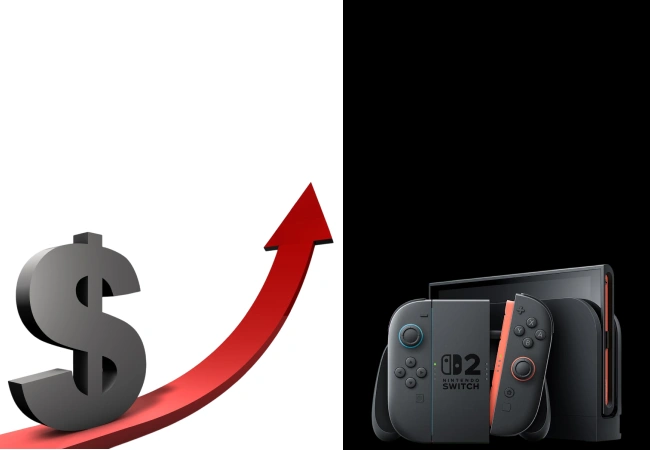
The conversation about Nintendo pricing doesn’t stop at tariffs. The simple truth is that “prices are higher these days”.
Bill Trinen, Nintendo’s Vice President of Player & Product Experience, told Polygon that the Switch 2 hardware includes major upgrades. Features like the GameChat feature and mouse mode add significant functionality, but they also increase production costs.
“As you add more technology into a system, especially today, it drives additional cost,” Trinen explained during the Polygon interview.
Inflation’s Role in Pricing
Trinen also addressed the obvious factor — inflation. The $150 jump from the original Switch to the Switch 2 price isn’t just about better tech. It’s also about the inflation impact that’s affecting the entire video game console market.
Trinen stated that, “we are in a time when inflation impacts nearly everything”. That includes components, labour, and logistics — all of which play into the Nintendo hardware strategy and overall pricing decisions.
The Bigger Picture: Value Over Cost
In the end, Nintendo of America is sticking to its long-term vision — focusing on the Switch 2 value proposition rather than competing solely on price.
The company’s message is clear: the Nintendo Switch 2 isn’t just another console. It’s an evolution in both performance and player experience. With upgraded specs, improved product experience, and thoughtful pricing, Nintendo aims to give gamers actual value for their investment.
And with Nintendo Switch Black Friday deals on the horizon, many gamers will be watching closely to see how the pricing and value balance out in real-world sales.
Nintendo’s Price Hike: Why Switch 2 and Game Costs Are Rising
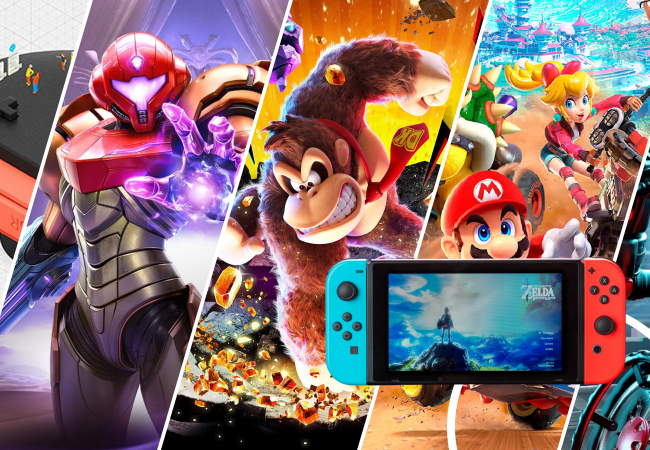
The Nintendo Switch 2 is creating headlines — not just for its specs but for its price tag. While fans were prepared for upgrades, the Switch 2 price jump surprised many.
According to Bill Trinen from Nintendo of America, the price hike reflects both the global economy and production realities. And he’s not wrong — inflation has changed everything, including the video game console market.
Understanding the Real Value of $299 in 2017
When the original Nintendo Switch launched in 2017, it cost $299. Today, that same amount equals about $391, according to the BLS CPI calculator.
That means the Switch 2’s price increase is partially tied to inflation. However, many customers’ incomes haven’t kept pace. For them, a 50% rise in cost feels steep — especially in times of economic uncertainty.
In an IGN interview, Trinen said, “Obviously, the cost of everything goes up over time.” He added that Nintendo tries to find “the right, appropriate price” for each product while balancing costs and value.
The New Reality of $80 Games
It’s not just hardware prices climbing — game prices are also going up. For over a decade, Nintendo fans enjoyed stable prices at $59.99 per game. That changed with The Legend of Zelda: Tears of the Kingdom, which launched at $69.99 in 2023.
Now, just two years later, Mario Kart World is priced at $79.99. This shift marks a significant moment in Nintendo pricing history.
Why Are Nintendo Games Getting Pricier?
In an interview with IGN, Trinen explained that video game pricing has been stable for an exceptionally long time. He even found an old Donkey Kong Country ad from 1993 showing the game at $59 on the SNES.
That’s more than 30 years of price consistency in the video game economy. But, as Trinen pointed out, “It would be great if we didn’t live in an era when everything is getting more expensive.”
Unfortunately, that’s today’s reality — one shaped by inflation impact, manufacturing costs, and the growing scale of modern games.
How Nintendo Sets Game Prices
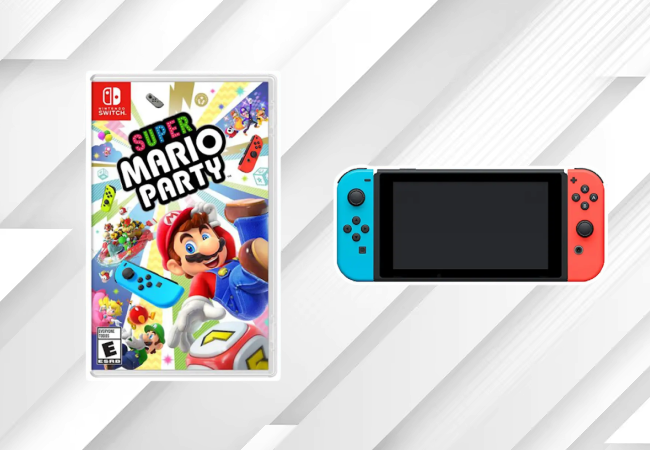
Trinen revealed that Nintendo’s hardware strategy and software pricing decisions depend on multiple factors. The company doesn’t apply a one-size-fits-all rule. Instead, it evaluates each title individually based on its overall game value and player experience.
According to Trinen, Nintendo looks at:
- Game length – How many hours of gameplay does it offer?
- Experience depth – How immersive and detailed is the content?
- Enjoyment factor – How much will players actually enjoy the game?
- Development costs – What went into creating the game’s features and visuals?
Using these factors, Nintendo assigns prices that reflect what it believes to be a fair value proposition for players.
Examples: From Zelda to Mario Kart
Take The Legend of Zelda: Tears of the Kingdom as an example. Nintendo priced it higher than earlier titles because it offered a massive world, improved mechanics, and more extended playtime.
However, that didn’t mean every game suddenly got a price bump. Trinen clarified that each release — whether it’s Mario Kart World or Donkey Kong Bananza — is priced independently, based on its player and product experience.
So while Zelda justified its Tears of the Kingdom price, other Nintendo Switch games might not follow the same pricing path.
Inflation and Production Costs
Beyond design and gameplay, inflation adjustment plays a considerable role. Production costs — from chips and graphics components to shipping and packaging — have all skyrocketed.
And with manufacturing in Vietnam and China, companies like Nintendo face added expenses due to import tariffs and shifting supply chains. Even Trump tariffs have forced brands to reconsider their console launch strategy, as costs of overseas production continue to rise.
Fans Feel the Pinch
While Nintendo interviews and executive explanations make sense on paper, many Nintendo fans remain sceptical. A $450 console and $80 first-party games stretch budgets, especially when household incomes haven’t risen much.
The question now is whether players will still buy Mario Kart World as enthusiastically as Mario Kart 8 Deluxe. If sales slow down, the market may force a price correction — or at least a more cautious approach to game development cost and pricing.
The Broader Gaming Industry Shift
The gaming industry as a whole is seeing rising costs. Bigger games demand larger teams, advanced tools, and longer production cycles. As a result, prices are catching up with the actual cost of development.
Nintendo’s approach, however, focuses on balance — combining upgraded specs, thoughtful design, and strong player experience. It’s about maintaining trust while ensuring sustainability.
With Nintendo Switch Black Friday deals coming up, gamers can expect limited-time offers on consoles, accessories, and even select titles. These discounts might help ease the sting of higher game prices — giving fans a chance to upgrade or expand their collection at a better value. Still, these promotions won’t change Nintendo’s long-term pricing philosophy: deliver premium experiences at fair, realistic prices.
Final Thoughts: Value Still Matters
The Switch 2 price reflects more than inflation — it represents a shift in the video game economy. Nintendo is betting that players will continue to value quality experiences over cost.
Whether it’s the GameChat feature, mouse mode, or improved performance, the Switch 2 hardware delivers new ways to play.
Yes, the prices are higher. But Nintendo’s goal remains clear — to provide an unbeatable gaming experience that justifies the investment.
As Trinen put it, “We price appropriately based on what we think the value of that experience is.” And for many loyal fans, that’s still worth paying for — even in this era of rising costs and economic uncertainty.


Leave a Reply