
Introduction
Cross-platform and edge-first frameworks are no longer a niche conversation happening in developer Slack channels. They’re becoming the default way serious teams think about building apps and if you’re still treating them as separate decisions, you’re probably leaving real performance on the table.
Here’s what this guide covers: what cross-platform frameworks actually are, why edge-first architecture matters now, how these two approaches work better together, and which tools are worth your time in 2026.
What You’ll Learn:
- What cross-platform and edge-first development means in plain terms
- How the two approaches complement each other
- Best frameworks and infrastructure tools available today
- Real-world use cases and honest limitations
- How to pick the right stack for your project
What Are Cross-Platform Frameworks?
Definition and Core Concept
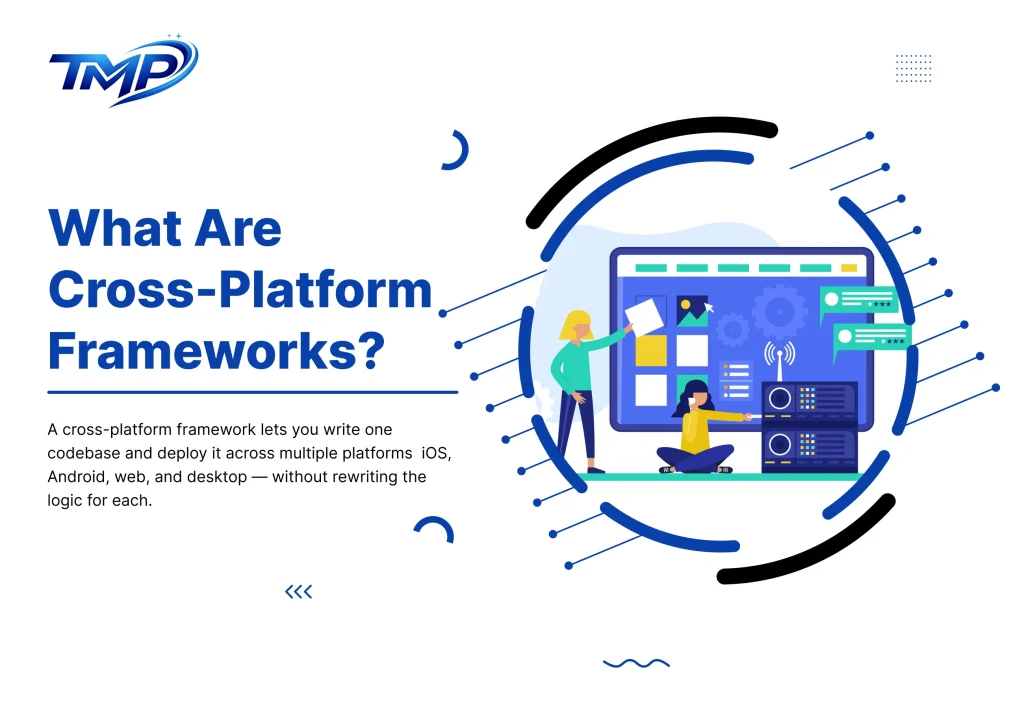
A cross-platform framework lets you write one codebase and deploy it across multiple platforms iOS, Android, web, and desktop — without rewriting the logic for each. The idea isn’t new, but the execution has gotten significantly better over the last few years.
Think of it like writing one recipe that works whether you’re cooking on gas, induction, or a campfire. The dish is the same. The environment adapts.
How Cross-Platform Development Works
Most frameworks share UI logic and business logic across platforms while handling platform-specific rendering separately. Some use native rendering engines (Flutter, React Native), others rely on web views (Ionic). Runtime layers sit between your code and the device OS, translating instructions into platform-native actions.
APIs handle the hardware layer — camera, GPS, push notifications — so your shared code still talks to device features without being rewritten per platform.
Popular Cross-Platform Development Frameworks
Flutter — Google’s UI toolkit, uses Dart, renders with its own engine. Excellent visual consistency.
React Native — JavaScript-based, maps to native components. Large ecosystem, strong community.
Ionic — Web-first approach using standard HTML, CSS, JS. Fast to build, slower on performance-heavy apps.
Kotlin Multiplatform — Shares business logic while keeping native UI. Strong for teams already in the Kotlin ecosystem.
.NET MAUI — Microsoft’s answer to Xamarin. Good for enterprise teams on the .NET stack.
Tauri — Builds lightweight desktop apps using web technologies. Surprisingly small binary sizes.
What Does “Edge-First” Mean in Modern Development?
Understanding Edge Computing
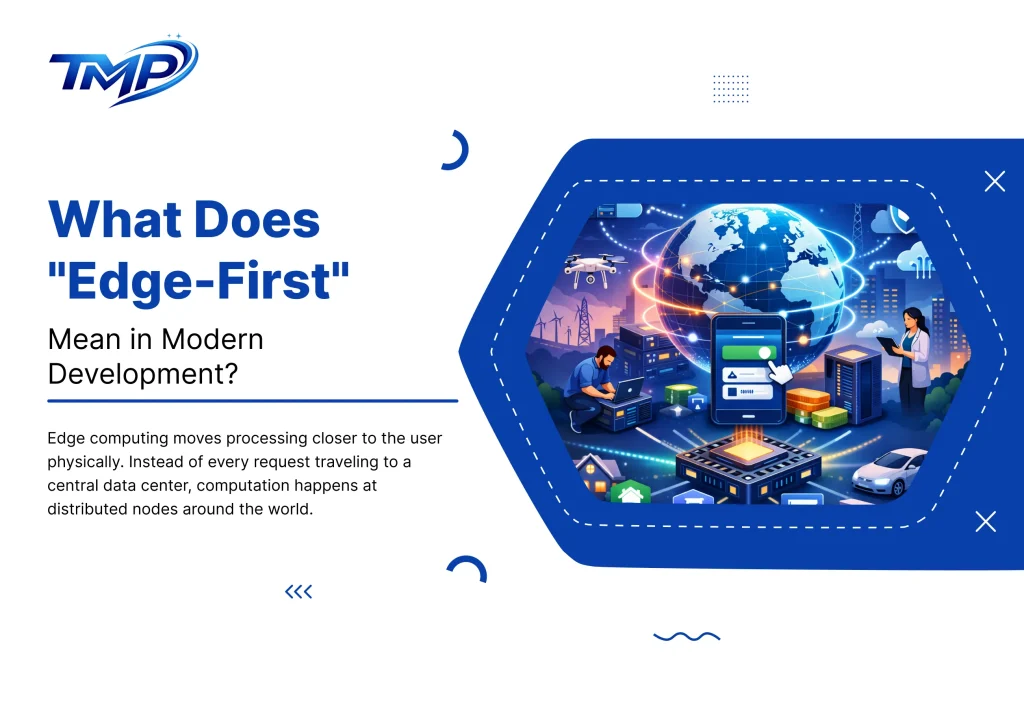
Edge computing moves processing closer to the user physically. Instead of every request traveling to a central data center, computation happens at distributed nodes around the world. The result is lower latency, faster response times, and less strain on your core infrastructure.
A user in Mumbai shouldn’t wait for a server in Virginia to respond. Edge fixes that.
Traditional Cloud vs Edge-First Architecture
| Factor | Traditional Cloud | Edge-First |
| Processing location | Centralized data center | Distributed global nodes |
| Latency | Higher (distance dependent) | Low (near user) |
| Scalability | Vertical/horizontal scaling | Distributed by default |
| Cost model | Predictable, higher baseline | Pay-per-request, lower idle cost |
| Cold start | Common | Minimized |
| Best for | Complex backend logic | Real-time, latency-sensitive apps |
Why Edge-First Development Matters Now
Three things changed simultaneously: AI workloads got heavier, global user bases became standard even for small apps, and users stopped tolerating slow load times. Edge-first architecture addresses all three. Real-time applications — live collaboration, multiplayer, financial dashboards — can’t afford the round-trip delay of traditional cloud alone.
Why Developers Are Combining Cross-Platform and Edge-First Approaches
Faster User Experiences
When your app runs on every platform AND the logic executes close to the user, you’ve eliminated two of the biggest performance drags at once. Reduced server distance plus consistent rendering equals noticeably faster apps — not just on benchmarks, but in actual daily use.
Better Scalability
Distributed edge deployments mean traffic spikes don’t collapse your backend. The load spreads across nodes automatically. Combined with a single codebase, you’re scaling without multiplying your infrastructure complexity.
Lower Development Costs
One codebase means one team maintaining it. Fewer infrastructure dependencies at the edge means lower cloud bills. For startups especially, this combination stretches both engineering hours and budget further than the traditional approach.
Easier Global Deployment
Regional edge servers handle traffic locally. CDN integrations push static assets to the edge automatically. What used to require a dedicated DevOps setup now takes a few configuration lines in most modern platforms.
Best Cross-Platform Frameworks for Edge-First Development
Flutter
Flutter’s rendering engine works independently of the platform, which makes it naturally compatible with edge-deployed backends. Best for apps needing pixel-perfect UI consistency across devices with real-time data from edge functions.
React Native and Next.js Edge Runtime
This combination is particularly strong for teams that want web and mobile coverage with edge-first backend logic. Next.js Edge Runtime handles API routes at the edge while React Native covers the mobile layer. The shared JavaScript ecosystem makes context-switching minimal.
Tauri
Lightweight, secure, and built on web technologies. Tauri desktop apps pair well with edge backends because the app itself is thin and the heavy logic lives at distributed nodes. Binary sizes routinely come in under 10MB.
Kotlin Multiplatform
Shares core business logic across Android, iOS, and backend. When you deploy that backend logic to edge infrastructure, you get consistent behavior everywhere without duplicating rules. Strong choice for fintech and health apps where logic correctness is critical.
Ionic and Capacitor
Web-first by nature, which means edge deployment of the web layer is straightforward. Rapid deployment cycles make this a practical choice for teams iterating quickly on low latency application development without a large infrastructure team.
Edge-First Platforms and Infrastructure Tools
Cloudflare Workers
Key features: V8 isolates, global network of 300+ locations, KV storage, Durable Objects for stateful logic. Pricing: Free tier available, paid from $5/month. Strengths: Fastest cold starts in the industry, massive global reach. Limitations: V8-only runtime restricts some language choices.
Vercel Edge Functions
Key features: Native Next.js integration, automatic edge deployment, streaming support. Pricing: Free on Hobby, Pro from $20/month. Strengths: Zero-config for Next.js teams, excellent DX. Limitations: Tightly coupled to the Vercel ecosystem.
Deno Deploy
Key features: TypeScript-native, Web standard APIs, global distribution. Pricing: Free tier, Pro from $10/month. Strengths: Modern runtime, no Node.js compatibility baggage. Limitations: Smaller ecosystem than Node-based alternatives.
Fastly Compute
Key features: WebAssembly-based, language-agnostic, high-performance. Pricing: Usage-based, enterprise pricing available. Strengths: Supports Rust, Go, AssemblyScript — not just JavaScript. Limitations: Steeper learning curve, less beginner-friendly.
Netlify Edge Functions
Key features: Deno-based, built-in A/B testing, context-aware routing. Pricing: Free tier, Pro from $19/month. Strengths: Great for content-heavy sites and JAMstack architectures. Limitations: Less suited for complex stateful applications.
Real-World Use Cases
E-Commerce Apps
Edge-first checkout flows reduce the latency between product page and payment confirmation. Combined with a cross-platform app development approach, the same logic runs on web and mobile without duplication.
Streaming Platforms
Content routing decisions — which server, which quality tier — happen at the edge in milliseconds. Less buffering, better adaptive streaming, happier users.
SaaS Dashboards
Global teams using the same dashboard shouldn’t have different experiences based on geography. Edge deployment normalizes performance across regions.
AI Applications
Inference at the edge is early but growing fast. Lightweight models running close to users enable real-time processing without the round-trip cost — relevant for voice, translation, and recommendation features.
Gaming and Multiplayer Apps
Latency in multiplayer is the difference between playable and broken. Edge nodes handle match state closer to players, reducing the lag that kills competitive experiences.
Benefits of Cross-Platform and Edge-First Frameworks
- Faster deployment cycles across platforms and regions
- Lower infrastructure costs through distributed, pay-per-use models
- Improved app performance from both rendering consistency and reduced network distance
- Better developer productivity with shared codebases
- Simplified maintenance — one fix propagates everywhere
- Stronger user experience through speed and consistency
Challenges and Limitations
Debugging Complexity
Distributed edge environments are harder to debug than centralized ones. Logs are scattered, reproduction is tricky, and tooling is still catching up.
Edge Runtime Restrictions
Most edge runtimes don’t support the full Node.js API. If your app depends on native modules or file system access, you’ll hit walls quickly.
Vendor Lock-In Risks
Cloudflare Workers and Vercel Edge Functions use proprietary APIs. Migrating later is painful. Abstract where you can.
Security Concerns
More distributed nodes mean a larger attack surface. Edge security requires deliberate configuration; it doesn’t come default.
Framework Compatibility Issues
Not every cross-platform development framework plays nicely with every edge platform. Testing compatibility early prevents expensive rewrites later.
How to Choose the Right Framework
| Scenario | Recommended Stack |
| Small startup, limited budget | Ionic + Netlify Edge Functions |
| Mobile-first product | Flutter + Cloudflare Workers |
| Web and mobile parity needed | React Native + Next.js + Vercel Edge |
| Enterprise with .NET team | .NET MAUI + Azure Edge |
| Desktop-focused app | Tauri + Deno Deploy |
| Shared logic priority | Kotlin Multiplatform + Fastly Compute |
Based on project size: Smaller projects benefit most from opinionated frameworks with managed edge infrastructure. Larger projects need flexibility — choose frameworks with clear migration paths.
Based on team skillset: A JavaScript team shouldn’t learn Dart just to use Flutter. Match the framework to existing skills first, then optimize.
Based on budget: Free tiers on Vercel, Netlify, and Cloudflare are genuinely usable for early-stage products. Don’t over-architect before you have traffic.
Based on performance requirements: Real-time apps need edge-first from day one. Content-heavy apps can add it incrementally.
Future Trends in Cross-Platform and Edge Development
AI-assisted edge computing is the most significant shift coming — inference running at the node level without cloud round-trips. Serverless expansion continues, with more stateful capabilities arriving at the edge via tools like Durable Objects. WebAssembly adoption is growing because it enables language-agnostic edge deployment. Edge-native databases are solving the last major pain point data locality. Real-time synchronization and offline-first applications will become table stakes for any app targeting global users.
Conclusion
Cross-platform and edge-first frameworks aren’t a trend to watch from the sidelines — they’re already the practical choice for teams that care about performance, cost, and developer efficiency. The question isn’t whether to adopt this approach. It’s which combination fits your team and your product right now.
Start with one framework. Deploy one edge function. Measure the difference. The best way to understand how edge-first frameworks improve app performance is to see it happen in your own app, not read about it.
Ready to choose your stack? Revisit the decision matrix above and match it to your project’s real constraints not the ones you imagine you’ll have.



Leave a Reply