

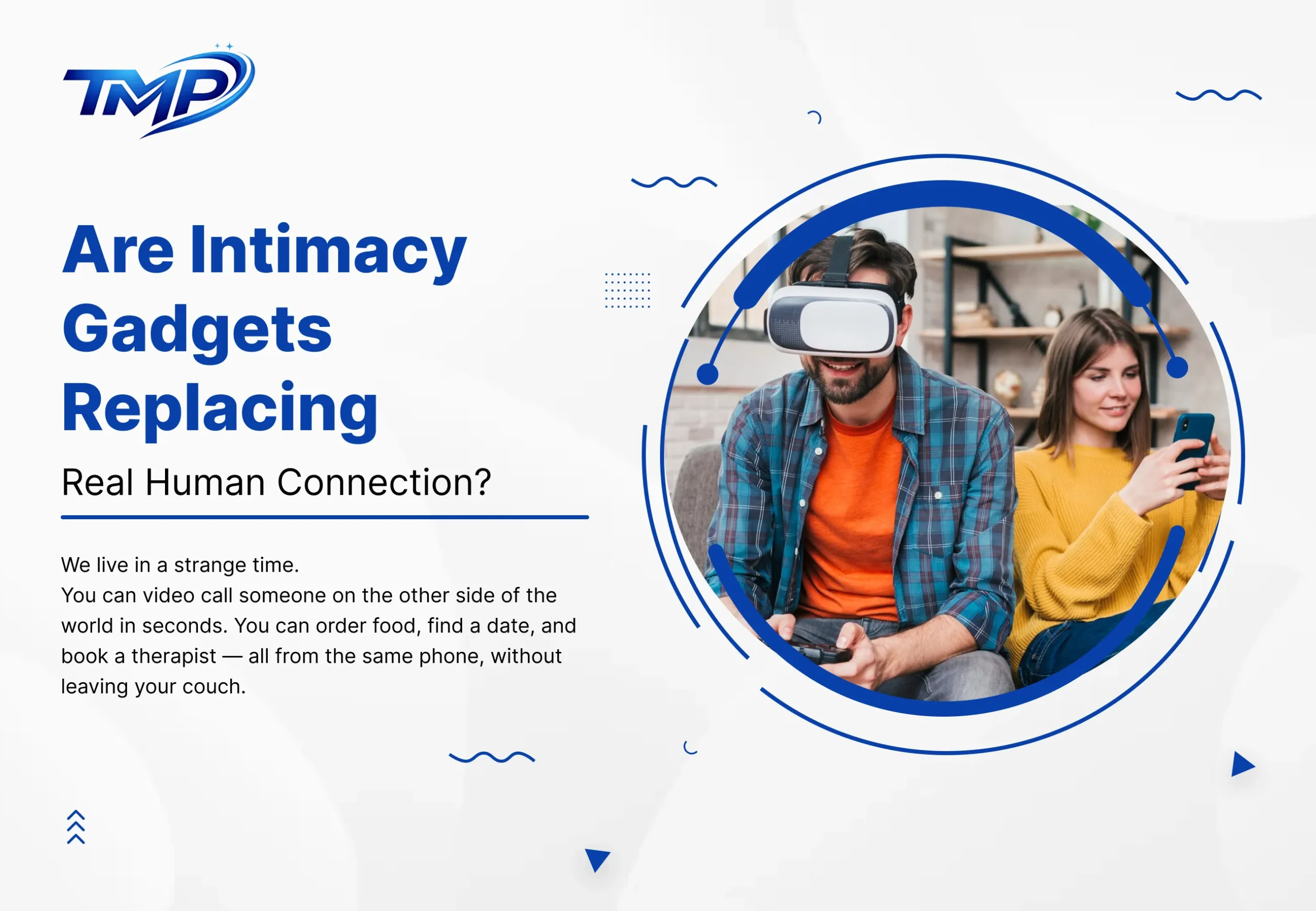
We live in a strange time.
You can video call someone on the other side of the world in seconds. You can order food, find a date, and book a therapist all from the same phone, without leaving your couch. Technology has made almost everything faster, easier, and more accessible.
And now it’s quietly moving into one of the most personal corners of human life.
So the question people are starting to ask sometimes in whispers, sometimes in research papers is this: are intimacy gadgets replacing real human connection? It sounds dramatic. But if you look at how people are actually living right now, it’s not a crazy question at all. It’s an honest one. And it deserves an honest answer.
The Rise of Intimacy Gadgets
Not that long ago, this was a topic most people wouldn’t bring up at dinner. It was private, even embarrassing. But something has shifted. Over the last several years, intimacy gadgets have quietly moved from the margins into the mainstream.
They’re better designed now. More discreet. More widely available. And the way they’re talked about has changed too less as something shameful, more as a category of personal wellness. Brands market them alongside meditation apps and sleep trackers. Conversations about them show up in magazines, podcasts, and therapists’ offices.
For many people, these devices offer something genuinely valuable a sense of comfort, personal autonomy, and control over an experience that usually involves a lot of vulnerability. That alone explains a big part of why they’ve grown so popular.
Why People Are Actually Using Them
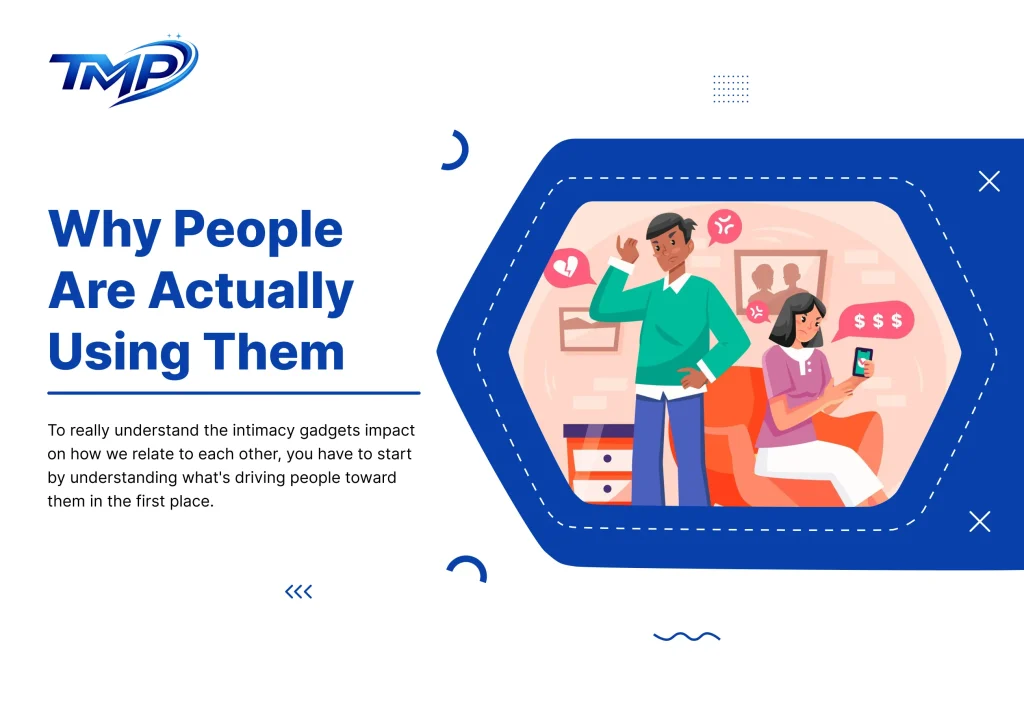
To really understand the intimacy gadgets impact on how we relate to each other, you have to start by understanding what’s driving people toward them in the first place. Because the reality is, it’s not just about people avoiding real relationships.
Life is exhausting, and real connection takes energy
Genuine relationships are wonderful. They’re also demanding. They ask for your time, your patience, your emotional availability even on the days when you have none of those things left. Intimacy tools and relationships exist on very different playing fields in this sense. A device asks nothing of you emotionally. It doesn’t have a bad day. It doesn’t need reassurance. For someone already stretched thin, that simplicity is genuinely attractive.
More connected online, more alone in real life
Here’s a truth that modern intimacy trends keep pointing back to loneliness in modern society is not going away. If anything, it’s getting worse. We have more ways to communicate than ever before, and somehow, more people feel unseen than ever before. Remote work pulled people out of offices. Phones replaced a lot of face-to-face time. Social anxiety became more common, not less. For people sitting in that gap, these gadgets don’t replace connection they just soften the edges of not having enough of it.
Some people need a gentler starting point
Not everyone comes to intimacy with confidence or a clean emotional slate. Some people are shy. Some are healing from something painful. Some just never had the right environment to understand their own needs. Digital intimacy devices can offer a space that’s free from judgment, pressure, or the fear of getting it wrong. For those people, that matters.
So Are They Actually Replacing Human Connection?
This is where things get more complicated and more interesting.
The honest answer is: not entirely. But the more careful answer is: they can, depending on how someone uses them.
Intimacy gadgets vs human connection isn’t really a competition between two equal things. They’re not the same category. Emotional connection vs physical pleasure operate on completely different levels of human experience. A device can be responsive. It cannot be present. It can provide sensation. It cannot provide understanding.
Technology and relationships have always had this tension. The tool isn’t the problem. The pattern of use is.
When someone reaches for a device because it feels easier than the emotional work of being with another person and they do that consistently, over time something starts to quietly erode. Not dramatically. Just slowly. The muscle of emotional intimacy, like any muscle, weakens when it stops being used.
The Real Concern Nobody Says Out Loud
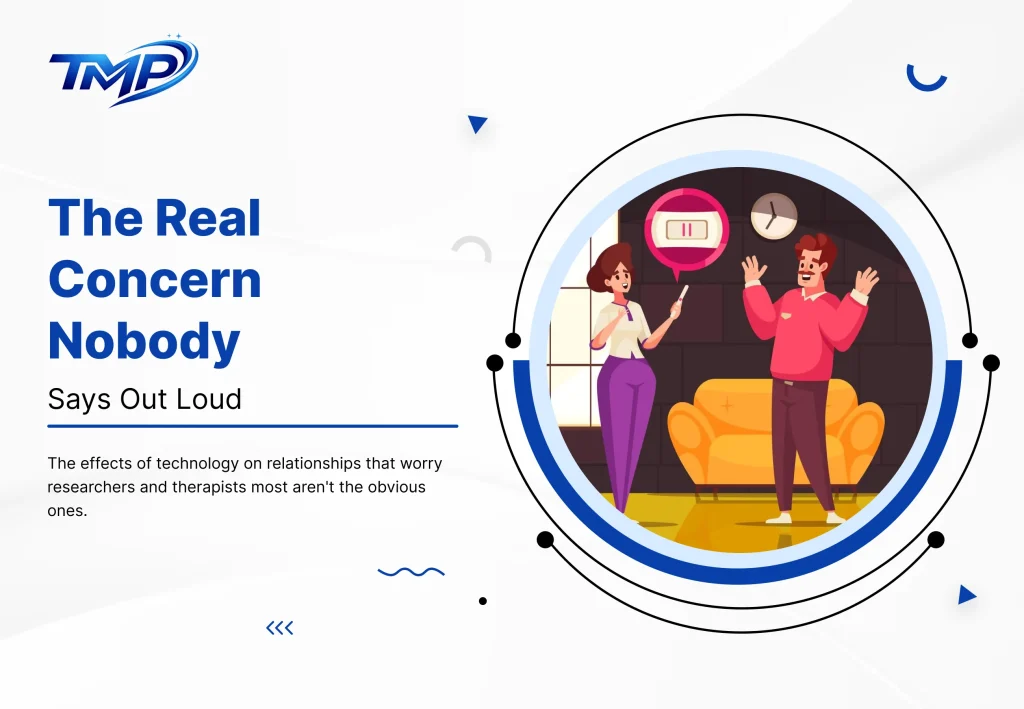
The effects of technology on relationships that worry researchers and therapists most aren’t the obvious ones. It’s not that someone owns one of these devices. It’s what happens when ease becomes a long-term preference over effort.
Real human connection requires something uncomfortable. It requires showing up when you’d rather not. It requires saying something vulnerable and not knowing how it will land. It requires sitting with another person’s emotions, not just your own. That discomfort is not a flaw in human relationships it’s actually where the depth comes from.
When people consistently choose options that remove all of that discomfort, the psychology of intimacy tells us they can slowly lose both the skill and the appetite for it. Lower motivation to build real relationships. Weaker ability to handle emotional complexity. A growing preference for experiences that are predictable and controlled.
That’s the real risk. Not the gadget. The habit.
But Here’s the Side That Deserves Equal Airtime
It would be unfair and inaccurate to frame this as purely negative. Because intimacy in the digital age has a more complicated story than that.
When used thoughtfully, these tools can actually strengthen real relationships. They help people understand their own bodies and needs more clearly, which often leads to more honest, more satisfying conversations with partners. They play a real role for couples in long-distance relationships who are physically apart for weeks or months at a time. They can quietly build confidence in someone who has spent years feeling too anxious or inexperienced to be at ease with another person.
For a lot of couples, the question of how to balance technology and relationships doesn’t even come up because these devices are simply one small part of a larger, healthy relationship. Not a replacement. An addition.
The Question That Actually Matters
We’ve been asking the wrong question this whole time.
“Are intimacy gadgets replacing real relationships?” puts all the focus on the object. The better question the one that actually changes behavior is: how is this person choosing to use it, and what does that choice reveal about how they feel about real connection?
How technology is affecting human connection is less about the technology itself and more about the emotional habits people build around it. Used with awareness, these tools can coexist peacefully with genuine intimacy. Used as an escape from the discomfort that real closeness requires, they quietly widen the distance between people.
Intent matters. Pattern matters. Awareness matters.
What the Science of Human Connection Tells Us
Here’s something worth holding onto: emotional bonding vs physical satisfaction will never be equivalent, no matter how sophisticated the technology becomes. Humans are not wired for physical sensation alone. We are wired for meaning.
We need eye contact that tells us we’re seen. We need conversations that surprise us and change how we think. We need the experience of being known by another person over time the kind of knowing that only comes from showing up through the hard moments, not just the easy ones.
Mental health and relationships research consistently shows that the quality of our close human connections is one of the strongest predictors of long-term wellbeing. Not our career. Not our income. Our relationships. No device, however advanced, touches that.
The Future: Evolution, Not Replacement
What’s actually happening isn’t replacement. It’s a reshaping.
The future of relationships in the digital age is being written right now, in real time, by the choices people are making about how they use these tools. Impact of gadgets on human behavior is real but humans are also remarkably adaptive. The desire for real connection hasn’t gone away. The longing to be truly known by another person hasn’t weakened.
If anything, the fact that loneliness is rising while technology is also rising tells us something important. The tools are not filling the gap they were perhaps hoped to fill. People still want the real thing.
Final Thoughts
Intimacy gadgets are not villains in this story. They’re tools. And like every tool ever invented, what they do to your life depends almost entirely on how you use them.
Can gadgets replace human intimacy? In the full, deep, lived sense of that word no. They can’t. Not even close. But they can become a comfortable substitute for the parts of intimacy that feel scary or hard. And that’s where the real conversation needs to happen.
Not in judgment. Not in panic. But in honest reflection about what we actually want from our lives and whether the habits we’re building are taking us toward that, or quietly away from it.
How to maintain emotional connection in modern relationships isn’t a mystery. Show up. Be vulnerable. Choose the discomfort of real closeness over the comfort of easy alternatives.
Because real connection the kind that actually changes you will always require another person. And that’s not a limitation. That’s the whole point.



Leave a Reply