

Introduction
Artificial Intelligence (AI) and Machine Learning (ML) are no longer ideas from sci-fi movies. They are now part of the tools we use every day. From simple automation to smart predictions, AI is quietly changing how software works.
Today, businesses depend on SaaS platforms, CRM systems, and cybersecurity tools to run smoothly. But these tools are no longer just “systems.” They are becoming intelligent.
If you’ve ever wondered how AI is actually shaping these tools—and what it means for your business—you’re in the right place.
What Are AI and Machine Learning in Simple Terms?
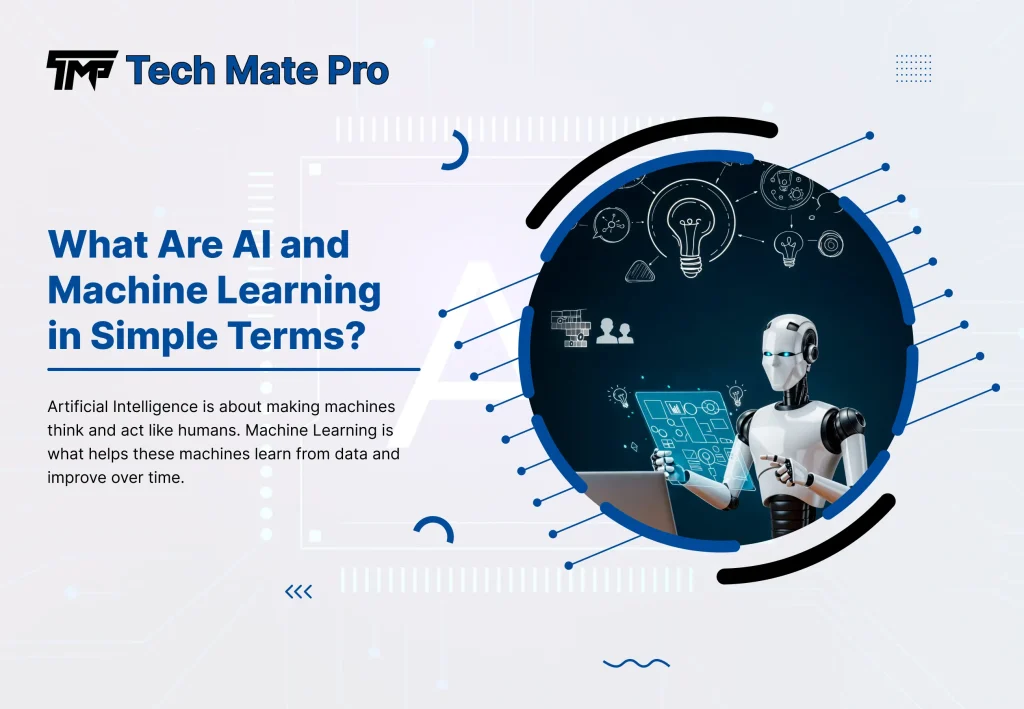
Artificial Intelligence is about making machines think and act like humans. Machine Learning is what helps these machines learn from data and improve over time.
Think of it like this:
- AI makes decisions
- ML improves those decisions with experience
This simple idea is the reason behind smarter tools, better predictions, and faster business growth.
AI in SaaS: From Basic Tools to Smart Systems
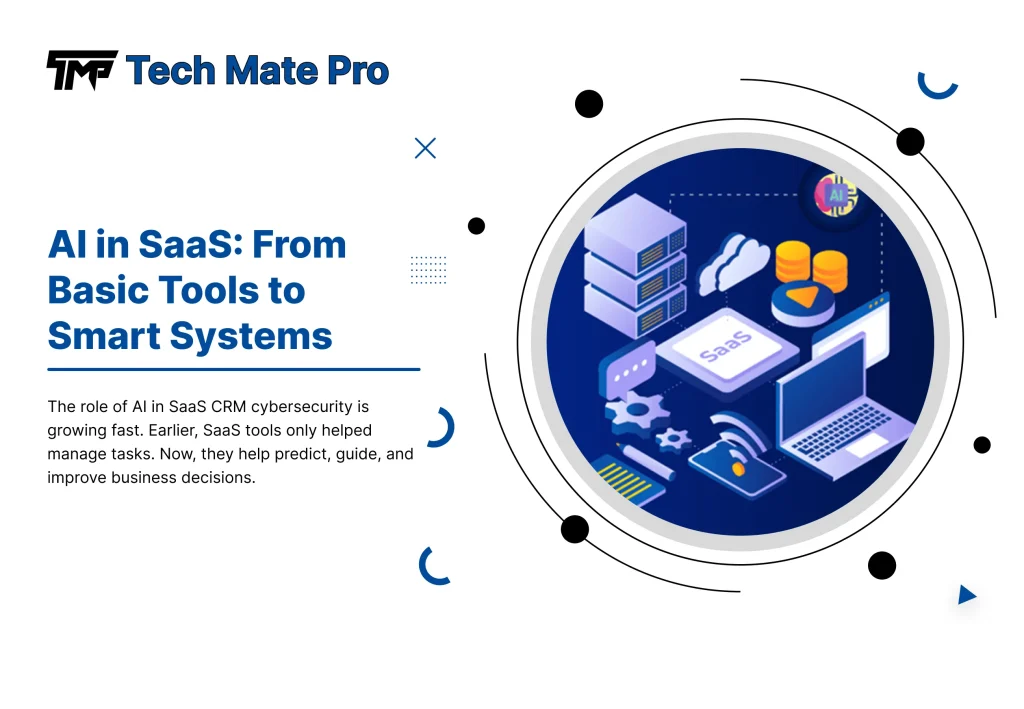
The role of AI in SaaS CRM cybersecurity is growing fast. Earlier, SaaS tools only helped manage tasks. Now, they help predict, guide, and improve business decisions.
Smarter Automation
The role of AI in SaaS industry has shifted from basic automation to intelligent automation. Today’s AI in SaaS platforms can understand patterns and improve workflows on their own.
For example, instead of just scheduling tasks, tools now suggest the best time based on past data. This is how AI is transforming SaaS and becomes visible in daily operations.
Some key improvements include:
- Smart email suggestions using AI automation tools
- Workflow optimization through SaaS automation with AI
- Early detection of project delays using predictive insights
Personalization at Scale
Users now expect personalized experiences. AI makes that possible.
With AI in SaaS platforms, businesses can offer dashboards, features, and recommendations tailored to each user. This improves engagement and retention.
This is where predictive analytics in SaaS and customer behavior analysis AI play a big role. These technologies study user behavior and adjust the experience in real time.
Predictive Analytics and Decision-Making
One of the biggest benefits of AI in SaaS is prediction. Businesses can now see what might happen next.
- Revenue forecasting
- Customer churn prediction
- Pricing optimization
This supports better data-driven decision making, which is essential for growth.
AI in CRM: Building Stronger Customer Relationships
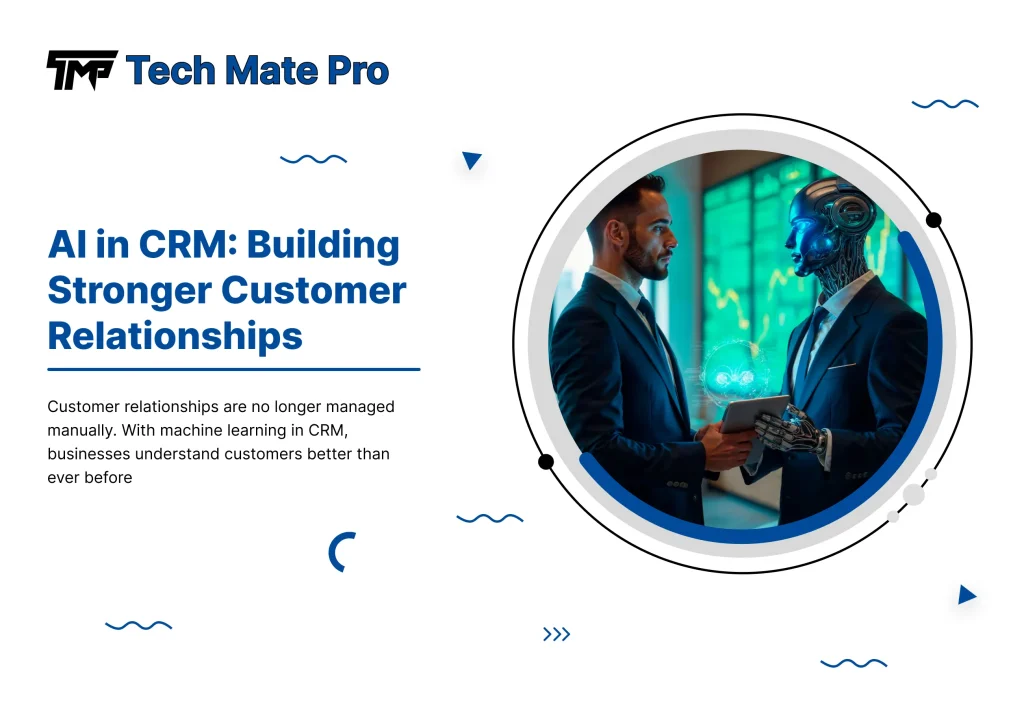
Customer relationships are no longer managed manually. With machine learning in CRM, businesses understand customers better than ever before.
The rise of AI powered CRM software has made systems more intelligent, responsive, and helpful.
Predictive Lead Scoring
Using AI applications in CRM, businesses can identify which leads are more likely to convert. This saves time and improves sales results.
This is one of the strongest benefits of machine learning in CRM systems, especially for growing companies.
Chatbots and Virtual Assistants
Modern CRM tools now include AI-powered chatbots. These tools are part of advanced intelligent CRM systems.
They help businesses:
- Offer 24/7 support
- Answer queries instantly
- Provide personalized responses
This improves customer satisfaction and reduces workload.
Deep Customer Insights
With machine learning in CRM, systems can analyze customer data deeply.
They understand:
- Buying patterns
- Preferences
- Pain points
This allows businesses to act smarter, not harder. It also supports real examples of AI in SaaS applications, where insights directly impact user experience.
Sales Forecasting
Sales teams benefit from accurate predictions. With AI, forecasting becomes more reliable.
This is a key part of AI in SaaS CRM cybersecurity, where CRM systems connect with SaaS tools to deliver better results.
AI in Cybersecurity: Smarter Protection in a Risky World
Cyber threats are becoming more advanced. That’s why AI in cybersecurity tools is no longer optional.
AI helps systems learn, adapt, and respond faster than humans.
Real-Time Threat Detection
Using AI threat detection systems, businesses can identify risks instantly.
These systems support:
- Real-time cybersecurity monitoring
- Detection of unusual activity
- Prevention of attacks before damage happens
This is a strong example of how AI improves cybersecurity in modern businesses.
Automated Incident Response
AI can take action without waiting for human input. This reduces response time and limits damage.
Many AI security tools for businesses now include automatic responses like:
- Blocking suspicious access
- Isolating infected systems
- Sending alerts instantly
Fraud Detection
With machine learning in cybersecurity, systems learn from past fraud cases. Over time, they become more accurate.
This supports AI-based fraud detection, which is essential for finance and e-commerce industries.
Behavioral Analysis
AI monitors user behavior to detect risks like:
- Unauthorized access
- Insider threats
- Account misuse
This is how AI reduces cyber threats in companies becomes a real, measurable benefit.
Key Benefits Across SaaS, CRM, and Cybersecurity
The combined power of AI in SaaS CRM cybersecurity brings many advantages.
Some of the most important benefits include:
- Improved efficiency through AI automation tools
- Better decisions using machine learning algorithms in business
- Stronger customer engagement via AI powered CRM software
- Faster threat detection with AI in cybersecurity tools
- Cost reduction through automation
These benefits clearly show the impact of artificial intelligence on SaaS industry and beyond.
Challenges and Limitations
Even though AI offers many benefits, it also comes with challenges.
Data Privacy Concerns
AI systems need data. But handling sensitive data raises privacy concerns. Companies need to adhere to clear regulations to maintain compliance.
High Implementation Costs
Small businesses may find AI expensive at the start. However, long-term benefits often outweigh the cost.
Dependence on Data Quality
AI performs only as well as the quality of data it is trained on. Poor data leads to poor results.
Skill Gap
There is a growing need for skilled professionals who understand AI systems. Without the right team, implementation becomes difficult.
Future Trends to Watch
The future of AI in SaaS and cybersecurity looks promising. As technology improves, tools will become even smarter.
We can expect:
- Fully automated SaaS platforms
- Advanced intelligent CRM systems
- Stronger AI threat detection systems
- More use of voice and conversational AI
These trends highlight how AI is transforming SaaS CRM and cybersecurity tools in the coming years.
Conclusion
The rise of AI in SaaS CRM cybersecurity is not just a trend—it’s a shift in how businesses operate.
From smarter SaaS tools to intelligent CRM systems and advanced cybersecurity protection, AI is changing everything.
Organizations that embrace AI early can secure a significant competitive edge. They make better decisions, serve customers better, and stay secure in a fast-changing world.
If there’s one thing to remember, it’s this: AI is not the future anymore. It is the present. And the sooner you use it, the better your results will be.



Leave a Reply