

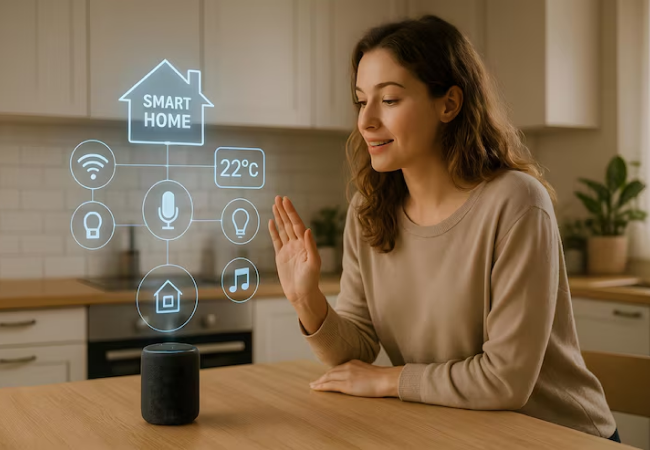
Imagine waking up to a house that knows you. Your curtains open slowly as the sun rises. The coffee machine starts brewing your favorite blend exactly when you stir. This isn’t a sci-fi movie anymore. This is the future of smart homes. Today, our living spaces are getting a massive brain upgrade. We are moving past simple voice commands. We are entering the era of AI-powered living.
In the past, a smart home just meant you could turn off lights with your phone. That was neat, but it wasn’t truly “smart.” Now, artificial intelligence in home automation is changing the game. Your home is starting to learn your habits. It knows when you are cold. It knows when you are hungry. This shift is making our lives easier, safer, and much more efficient.
The smart home technology trends of 2026 focus on one thing: intuition. We want technology that works in the background. You shouldn’t have to program a thermostat anymore. The thermostat should know you’re coming home early. It should adjust the temperature before you even park your car. This is the ultimate goal of a connected home ecosystem.
What is an AI-Powered Smart Home?
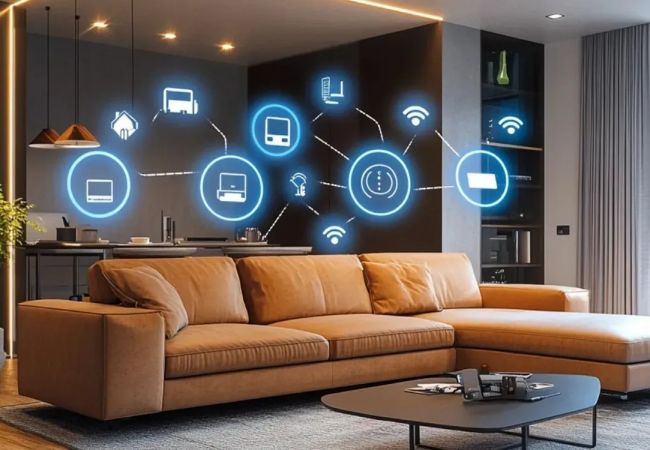
An AI-powered smart home is a house that uses machine learning to manage itself. It uses sensors and data to make decisions. Unlike old systems, it doesn’t wait for you to press a button. It looks for patterns in your daily life. This is the core of intelligent home management. It turns a “house” into a responsive partner that looks after your well-being.
Think about your home security. A standard camera just records video. But an AI home security system is different. it can tell the difference between a delivery person and a stranger. It can recognize your face and unlock the door automatically. This level of smart home automation provides peace of mind that we never had before. It makes your living space feel proactive rather than reactive.
These systems rely on a connected home ecosystem. All your devices—from your fridge to your lightbulbs—talk to each other. They share data to create a seamless experience. This home AI integration ensures that every part of your house works toward a common goal. That goal is to make your life as comfortable as possible while saving energy and time.
The Rise of Smart Home Technology Trends
We are seeing a huge explosion in smart home technology trends this year. One major trend is the move toward “invisible tech.” We are tired of seeing bulky gadgets everywhere. The future of smart homes involves sensors hidden in walls and furniture. You won’t even see the technology, but you will certainly feel its benefits every single day.
Another big trend is energy-efficient smart homes. AI is great at saving power. It can turn off appliances when electricity prices are high. It can lower the heat in rooms that nobody is using. This sustainable smart living approach helps the planet and your wallet. Most people find that the system pays for itself in a few years through lower utility bills.
We are also seeing more focus on health. Many AI-powered smart homes now monitor air quality and sleep patterns. Your house might suggest you go to bed earlier because you look tired. Or it might turn on the air purifier if it detects pollen. This intelligent home management acts like a personal health coach that never sleeps.
How Artificial Intelligence in Home Automation Works
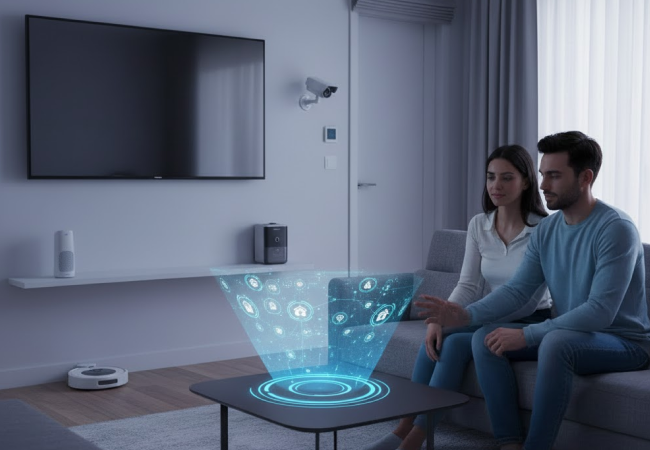
The “magic” behind artificial intelligence in home automation is data. Every time you flip a light switch, the AI takes a note. Over time, it builds a map of your life. It uses “edge computing” to process this data quickly inside your home. This means your data stays private and the response time is nearly instant.
The AI acts as the “brain” of the connected home ecosystem. It sends commands to your “smart” devices. For example, if the AI sees you are watching a movie, it dims the lights. It might even silence your phone notifications. This home AI integration is what makes the experience feel so smooth. It removes the friction from your daily routines.
Safety is also a huge part of the technical side. Modern AI home security systems use advanced encryption. They protect your home from digital hackers just as well as physical ones. This focus on secure smart home devices is essential for the future of smart homes. People need to know their data is safe before they let AI run their lives.
Benefits of AI-Powered Living
The biggest benefit of AI-powered living is reclaimed time. Think about all the small tasks you do daily. You check the locks, adjust the AC, and manage the grocery list. An intelligent home management system handles these for you. This frees up your brain to focus on things that actually matter, like family or work.
Another plus is the sustainable smart living factor. We all want to be greener. AI makes it easy by optimizing your home’s carbon footprint. It ensures no energy is wasted. In an energy-efficient smart home, the house itself becomes a tool for conservation. It is a win-win for the environment and your monthly budget.
Lastly, there is the comfort factor. Walking into a perfectly lit, perfectly cooled home is a luxury. Smart home automation brings that luxury to everyone. It creates an environment tailored specifically to your personality. This personalized touch is why AI-powered smart homes are becoming the new standard for modern housing.
Top 9 AI Smart Home Features for 2026
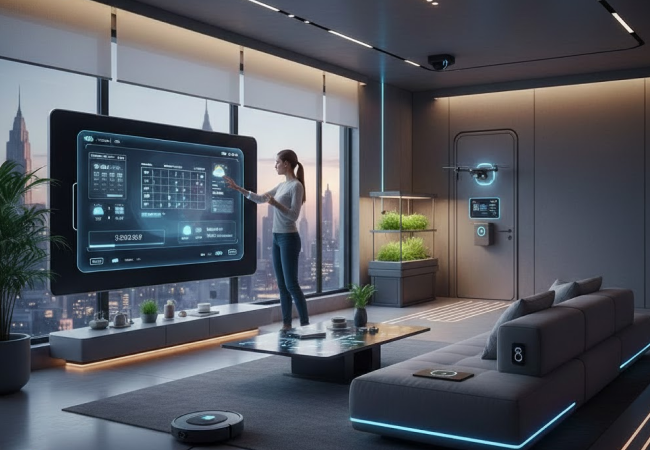
- Predictive Climate Control: Your thermostat learns your schedule and the weather to keep you comfy.
- AI Home Security Systems: Cameras that recognize family members and alert you to real threats only.
- Automated Lighting Scenes: Lights that change color and brightness based on the time of day and your mood.
- Smart Kitchen Assistants: Fridges that track expiration dates and suggest recipes based on what you have.
- Voice-Activated Everything: Use natural language to control your entire connected home ecosystem.
- Health and Wellness Sensors: Beds and floors that monitor your vitals and alert doctors in an emergency.
- Energy Management Dashboards: Clear data on how much power you are saving with sustainable smart living.
- Self-Cleaning Surfaces: AI-driven robots and UV lights that keep your home sanitized and dust-free.
- Smart Water Management: Systems that detect tiny leaks before they turn into expensive floods.
Creating an Energy-Efficient Smart Home
Building an energy-efficient smart home starts with the big appliances. Your HVAC system and water heater use the most power. By adding artificial intelligence in home automation, you can cut their usage by 30%. The AI learns when you are away and puts the house into “eco-mode” automatically. This is a key part of intelligent home management.
Lighting is another easy win. Smart bulbs use very little power to begin with. But when you add AI, they only turn on when someone is in the room. This smart home automation trick saves a surprising amount of money over a year. It also extends the life of your bulbs. It is one of the simplest ways to start your journey into sustainable smart living.
Finally, consider smart windows and blinds. An AI-powered smart home can close the blinds during the hottest part of the day. This keeps the house cool without using the AC. In the winter, it opens them to let the sun warm the rooms. This natural temperature control is a hallmark of the future of smart homes. It proves that tech can work with nature, not against it.
Security in the Connected Home Ecosystem
We cannot talk about the future of smart homes without talking about privacy. A connected home ecosystem collects a lot of personal info. It knows when you are home and what you like to eat. This is why you must choose secure smart home devices. Look for brands that offer end-to-end encryption and regular software updates.
An AI home security system is your first line of defense. It doesn’t just watch; it thinks. It can spot a package thief and sound an alarm or turn on the sprinklers. This proactive smart home automation keeps your family safe in real-time. It is much more effective than a traditional alarm system that only goes off after a window is broken.
To keep your home AI integration safe, use strong, unique passwords. Enable two-factor authentication on all your smart home apps. Most security breaches happen because of human error, not bad tech. Being a smart user is just as important as having a smart house. This ensures your AI-powered living experience stays positive and private.
The Path to Sustainable Smart Living
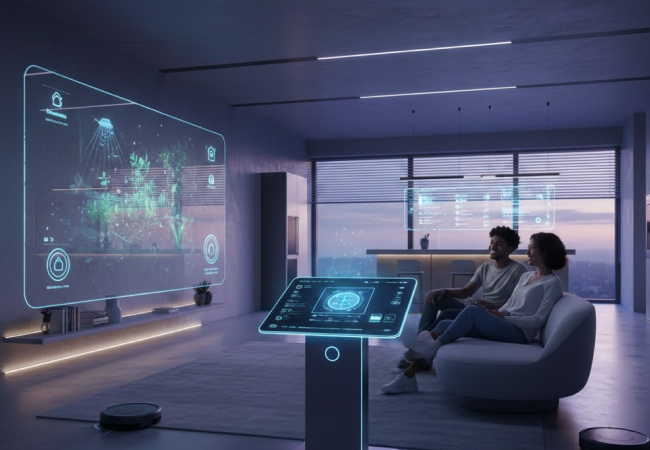
Sustainable smart living is more than just a buzzword. It is a necessity for the future. By using artificial intelligence in home automation, we can reduce waste on a massive scale. Imagine a neighborhood where every house shares energy. If your solar panels make extra power, the AI sends it to your neighbor who needs it. This is the ultimate vision for energy-efficient smart homes.
Water conservation is also getting a boost. Smart irrigation systems check the weather forecast. They won’t water your lawn if it is going to rain. This intelligent home management saves thousands of gallons of water per year. It is a small change that makes a big impact. It shows how smart home technology trends are helping us live better lives.
In 2026, many new homes come with these features built-in. But you can also “retrofit” an older house. Adding a few secure smart home devices can make a huge difference. You don’t have to change everything at once. Start with a smart thermostat or some bulbs. Every step toward AI-powered living is a step toward a better future for everyone.
FAQ: Your Questions Answered
Is an AI-powered smart home expensive to set up?
It can be, but you can start small. You don’t need a million dollars to enjoy smart home automation. Starting with a few secure smart home devices like a hub and some lights is very affordable. Over time, the energy savings from your energy-efficient smart home will help pay for the upgrades.
Can I still control my house manually?
Yes! A good intelligent home management system always gives you a manual override. You can still use physical switches or your phone. AI-powered living is meant to assist you, not take over your life. You stay in control of your connected home ecosystem at all times.
What happens if the internet goes down?
Most modern home AI integration systems are designed to work offline for basic tasks. Your lights will still work, and your doors will still lock. However, you might lose some of the advanced features of your AI home security system until the connection returns. Always look for devices that support “local control.”
Conclusion
The future of smart homes is bright, intuitive, and incredibly helpful. We are moving toward a world where our houses actually take care of us. By embracing AI-powered living, we gain more than just cool gadgets. We gain time, security, and a more sustainable way of life. It is an exciting time to be a homeowner.Whether you are interested in energy-efficient smart homes or the latest AI home security system, the technology is ready for you. Start building your connected home ecosystem today. You will be amazed at how much easier your daily routine becomes. The “home of tomorrow” is officially here today.






Leave a Reply