

1. Introduction: Are Smartphones Reaching Their Limit?

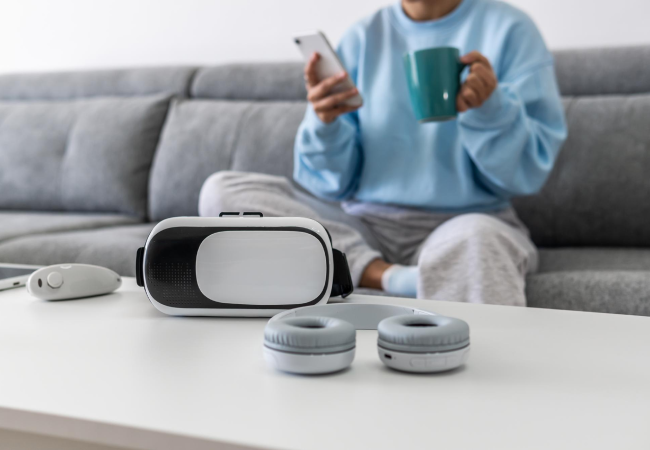
For more than ten years, smartphones have shaped how we live. We wake up with them. We work on them. We relax with them. Over time, phones became the center of daily life. But this constant use now comes with a cost. Long screen hours, nonstop alerts, and endless scrolling create stress and fatigue.
By 2026, many people feel overwhelmed. They want technology that helps without demanding attention. This is where life beyond phones begins to make sense. Instead of staring at screens all day, users now prefer tools that work quietly in the background.
This change is driving the rise of AI-driven gadgets. These tools reduce screen use. They deliver help at the right moment. They feel less distracting and more natural. As a result, technology beyond smartphones is no longer a future idea. It is already part of daily life.
In AI gadgets in 2026, the focus shifts from screens to simplicity. Devices listen. They learn. They respond. This shift is shaping the future of smartphones, where phones play a smaller role and smarter tools take the lead.
2. Why the World Is Moving Beyond Smartphones

Smartphones still matter. But they are no longer perfect. One major problem is screen fatigue. People spend hours every day on small displays. This leads to eye strain, poor sleep, and mental stress. Over time, this creates digital burnout.
Another strong reason is behavior change. Users want faster and easier interaction. Tapping and typing feel slow. That is why hands-free technology is growing fast. Talking to devices feels natural. Voice commands save time. They also reduce screen dependence.
AI systems are also getting smarter. Context-aware tools now understand habits, location, and preferences. This allows devices to act before users ask. In AI gadgets in 2026, speed and accuracy improve daily.
Privacy is another factor. Many users worry about data misuse. New AI-powered devices focus on local processing. With on-device AI, data stays closer to the user. This builds trust and control.
Together, these changes push society toward life beyond phones. Smartphones still exist. But they no longer control every interaction.
3. What Are AI-Driven Gadgets?
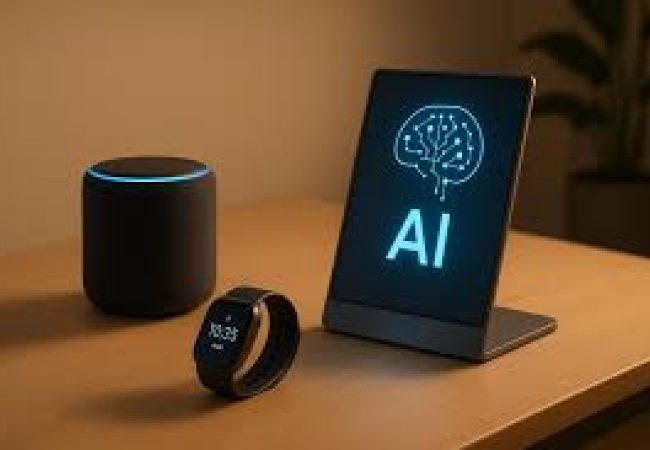
AI-driven gadgets are smart tools powered by artificial intelligence. They learn from behavior. They adapt to routines. They respond without constant input. Most importantly, they work without heavy screen use.
These gadgets rely on on-device AI for faster and safer performance. Processing happens locally. This reduces delays and improves privacy. Users interact through voice, gestures, or vision instead of touch.
Many tools use voice-first interfaces. Others respond to movement or eye direction. This makes interaction feel human and smooth. Over time, devices learn daily patterns and act automatically.
Another key feature is prediction. These gadgets understand context. They understand the right moment to notify you and the right moment to stay quiet.
In simple terms, technology beyond smartphones feels calmer and smarter.
In AI gadgets in 2026, technology blends into life instead of interrupting it.
4. Key AI-Driven Gadgets Replacing Smartphones in 2026
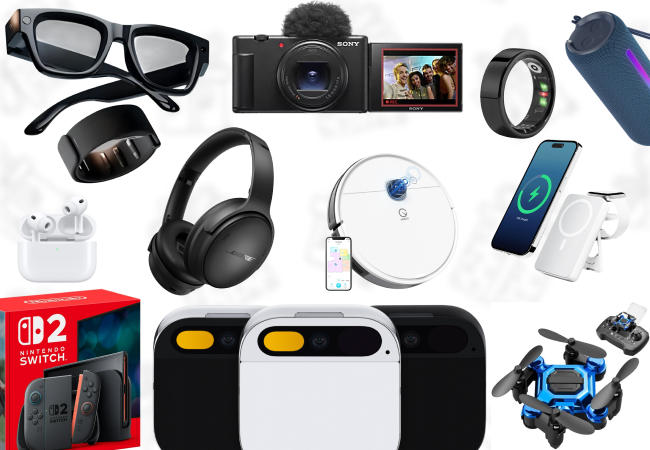
In 2026, several smart devices replacing smartphones handle daily tasks with ease. These tools reduce screen time. They increase speed. They make interaction natural.
Instead of pulling out a phone, users rely on specialized AI-powered devices designed for specific needs. Below are the most impactful ones shaping life beyond phones.
4.1 AI Smart Glasses
AI smart glasses bring digital information directly into view. They display navigation, messages, and translations in real time. Users stay focused on the world, not a screen.
These glasses support travel and work. They translate languages instantly. They guide directions without maps. Notifications appear only when needed.
Because they are hands-free, they improve safety and focus. In AI gadgets in 2026, smart glasses lead the shift toward screenless technology.
Use cases include:
- Travel navigation and translation
- Office collaboration and meetings
- Daily tasks and reminders
4.2 AI Wearables (Smart Rings, Advanced Smartwatches)
AI wearables 2026 are smaller but smarter. Smart rings and advanced watches track health silently. They manage payments. They deliver alerts without distraction.
These health-focused AI wearables monitor heart rate, sleep, stress, and activity. Data updates continuously without user effort. This improves long-term wellness.
Many wearables now work independently. They no longer depend on phones. This strengthens life beyond phones and supports technology beyond smartphones.
Use cases include:
- Fitness and activity tracking
- Health monitoring and alerts
- Lifestyle and daily management
4.3 AI Voice Assistants & Personal AI Companions
Voice assistants are no longer basic tools. In AI gadgets in 2026, they understand tone, context, and emotion. They feel more like partners than machines.
These assistants manage schedules. They suggest actions. They remind users naturally. Over time, they learn preferences and improve accuracy.
Personal AI companions reduce mental load. They handle routine tasks quietly. This supports hands-free technology and lowers screen use.
Use cases include:
- Home automation
- Productivity and planning
- Reminders and daily organization
4.4 AI Home Devices & Ambient Computing
Ambient computing changes how homes work. Technology blends into the environment. Devices respond automatically to behavior.
Smart home AI devices control lighting, temperature, and security. They adjust settings based on habits. Users no longer need constant control.
This invisible tech improves comfort and efficiency. It also supports screenless technology, making homes smarter without effort.
Use cases include:
- Smart homes and automation
- Energy management
- Home security
4.5 AI Health & Wellness Gadgets
Health technology sees major growth in AI gadgets in 2026. Medical-grade wearables track vital signs continuously. They detect issues early.
These tools support preventive care. They monitor sleep, stress, and heart health. Alerts help users act before problems grow.
Health-focused AI wearables reduce hospital visits. They support mental wellness. They improve quality of life.
Use cases include:
- Preventive healthcare
- Mental health support
- Sleep and recovery tracking
5. How AI Gadgets Change Daily Life in 2026
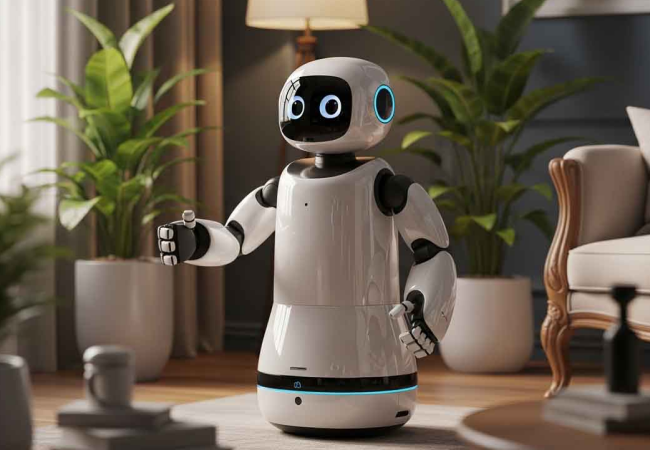
Daily life feels lighter with AI-driven gadgets. Screen time drops sharply. Users spend more time engaging with people and surroundings.
Information arrives faster. Voice alerts replace scrolling. Subtle notifications replace distractions. Multitasking becomes easier as AI handles routine work.
Interaction feels natural. Technology supports moments instead of stealing them. This is the true impact of life beyond phones.
6. Benefits of Life Beyond Smartphones
The benefits are clear and practical. Less screen time means less stress. Focus improves. Productivity rises.
Health tracking becomes continuous and passive. Personalization improves as AI learns habits. Overall, technology beyond smartphones feels more human.
Key benefits include:
- Reduced digital stress and burnout
- Better focus and daily productivity
- Improved health insights
- Personalized user experiences
7. Challenges and Concerns of AI-Driven Gadgets
Despite progress, challenges remain. Privacy is a top concern. Even with on-device AI, trust must be earned.
Over-dependence is another risk. Too much automation may reduce basic skills. Cost also limits access, especially in developing regions.
Ethical concerns matter too. Transparency, bias, and fairness require attention as AI-powered devices grow.
8. Will Smartphones Disappear Completely?

Smartphones will not vanish in 2026. Instead, they evolve. Phones become backup tools rather than constant companions.
They coexist with smart devices replacing smartphones. This balance defines the future of smartphones, not elimination but reduced dependence.
9. What the Future Holds: 2027 and Beyond
Beyond 2026, AI becomes more invisible. Ambient computing expands. Brain-computer interfaces may emerge. Wearables grow smarter.
The goal stays clear. Technology should support life quietly. This vision strengthens life beyond phones for years ahead.
10. Pros and Cons
Pros include:
- Less screen time
- Faster access to information
- Better health insights
- Natural interaction
Cons include:
- Privacy risks
- High costs
- Ethical concerns
- Over-reliance on AI
11. Conclusion
AI-driven gadgets are reshaping daily life. In 2026, technology becomes calmer and smarter. Smartphones no longer dominate every moment.
This shift defines a new balance. Convenience meets wellness. Automation meets control. Life beyond phones is no longer a concept. It is happening now.
As AI gadgets in 2026 grow, technology beyond smartphones leads the way. This marks a major step in the future of smartphones and digital living.
12. FAQs: Life Beyond Phones & AI Gadgets
Q1. Will AI gadgets fully replace smartphones in 2026?
No. They reduce dependence, but phones still exist.
Q2. Are AI-driven gadgets safe and private?
Many use on-device AI, but privacy must stay a priority.
Q3. Which AI gadget is most popular in 2026?
Wearables and AI smart glasses lead adoption.
Q4. Do AI wearables work without phones?
Yes. Many advanced AI wearables 2026 work independently.
Q5. Is life beyond smartphones better for mental health?
Yes. Less screen time often improves focus and reduces stress.


Leave a Reply